



Not every link exchange partner is a good one. Some can hurt your link building campaign more than they help. So how do you know who to trust?
There are a few clear red flags that tell you when to walk away. Ignoring them can lead to wasted time or low rankings.
In this blog, we’re sharing 8 link exchange red flags we never ignore so you don’t get stuck in a bad backlink network.
Let’s break them down!
8 Link Exchange Red Flags That Scream “Walk Away”
Here’s a list of red flags that signal a link exchange partner isn’t worth your time.
Generic Outreach Emails for Backlinks
Nothing kills a good link exchange opportunity faster than an impersonal outreach email.
You’ve probably seen those long messages that start with “Hi there,” “Hi sir/mam,” or even worse, “Hi dear.” They are more likely AI-generated, lack email personalization, and honestly, they’re just bad.
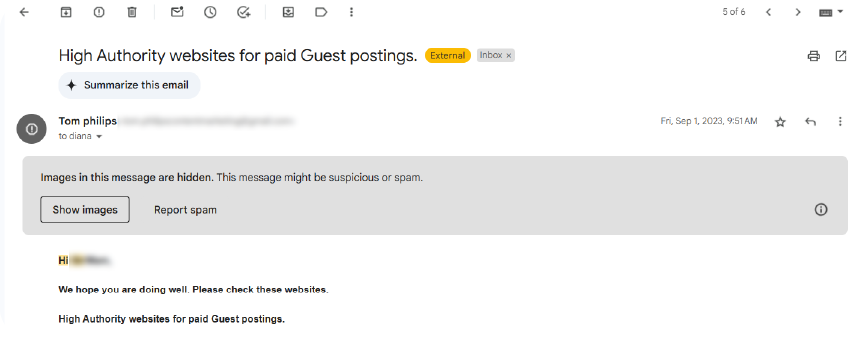
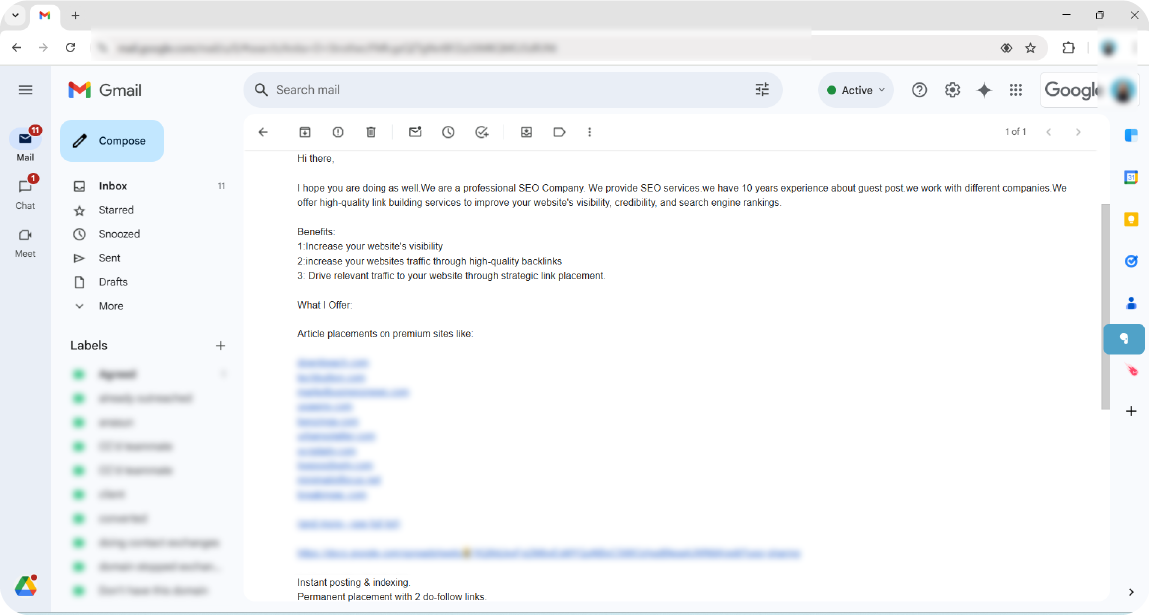
So, this is a big red flag! If someone isn’t bothered enough to write a compelling link building outreach email and make a good first impression, do you really want to work with them? Probably not.
A strong backlink network is built on real connections, not spammy or poorly-written emails.
Unresponsive Link Partners
Link building mostly depends on good communication. If a partner takes forever to respond, things can get frustrating, especially when you’re trying to finish a big batch of backlinks.
How do we know if someone’s not worth the wait?
- It takes days or even weeks to hear back from them.
- Your messages get ignored
- They always have an excuse for not replying on time.
If all three sound familiar, you’re dealing with people who just aren’t responsive enough.
It’s not the end of the world, but it slows everything down and makes it difficult to build trust, which is the last thing you need in link building.
Mass Domain Offers Right from the First Email
The first email for link building outreach is a chance to make a strong first impression and offer a partnership that’s mutually beneficial, right?
But sometimes, we get emails that are not only poorly-written but also come with a bunch of domains.
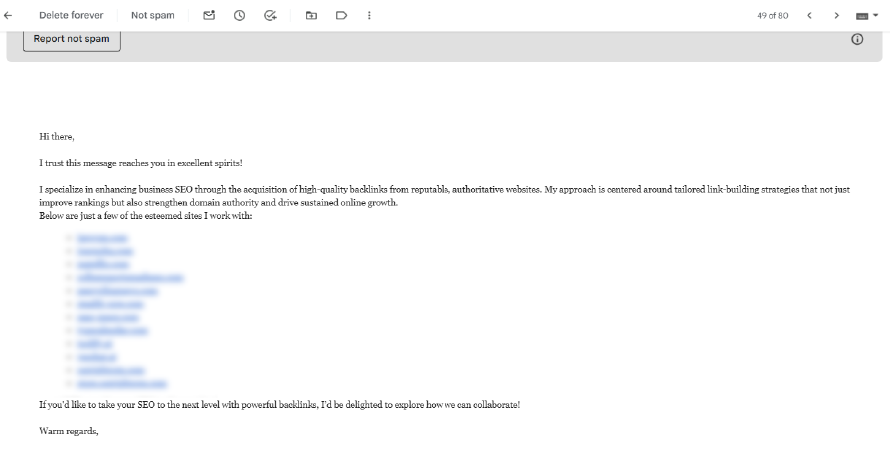
If someone offers you a bulk list of domains for a link exchange, it’s a big red flag. Most of the time, those links come from PBN (Private Blog Network) websites, which we recommend avoiding.
We’re not saying it’s always the case, but it’s something to watch out for.
So, always take the time to check these websites using link building tools before agreeing to exchange links. Better safe than sorry!
Excessive Follow-Ups That Feel Desperate
Another big red flag in link exchanges? Too many follow-up emails.
We usually follow up every two or three days, except for rare cases when we have a tight deadline and need that one backlink ASAP.
Spamming people, whether on email, LinkedIn, or Slack, is just annoying. No matter how many messages you send, it won’t speed up the process, especially when you’ve agreed on a specific timeline.
Our advice? Respect each other’s time. Everyone has a busy schedule. So, stay patient, as someone might be trying really hard to get that backlink live.
Delayed Link Placement Without Notice
Sometimes partners can postpone the date to make a backlink live without any explanation or prior notice even though they owe us.
They promise, “It’ll go live soon,” but don’t explain why there’s a delay. This often leads to canceled requests, especially if we’ve already finished a client’s batch and the request is not relevant anymore.
This is a big red flag because poor communication disrupts the planning process, making it hard for us to estimate when and how many backlinks will be ready.
So, keep an eye out for this and only work with partners who you can count on.
Too Many PBN Link Offers
Another link exchange red flag is when we ask for backlinks, and instead, they offer us PBN backlinks.
PBNs, or Private Blog Networks, are groups of websites created mainly for building backlinks. While this type of backlink might seem like an easy shortcut, Google doesn’t like them. They’re considered a form of link manipulation, which is against its guidelines.
We highly advise you to avoid building PBN backlinks if you want to rank higher on Google. They can hurt your rankings, and in some cases, even lead to Google penalties.
So, when we’re offered these, the answer is always the same: No, thanks. We’re good.
Unprofessional and Sloppy Link Requests
The clearer your link building communication is, the faster those link exchanges will happen.
However, sometimes, we get link requests that are poorly formatted or unclear, and that slows everything down. This is one of the most common link building mistakes partners make.
Here’s what a bad link request looks like:
A link partner shares a request using a Google doc to show where they want their backlink to be placed.
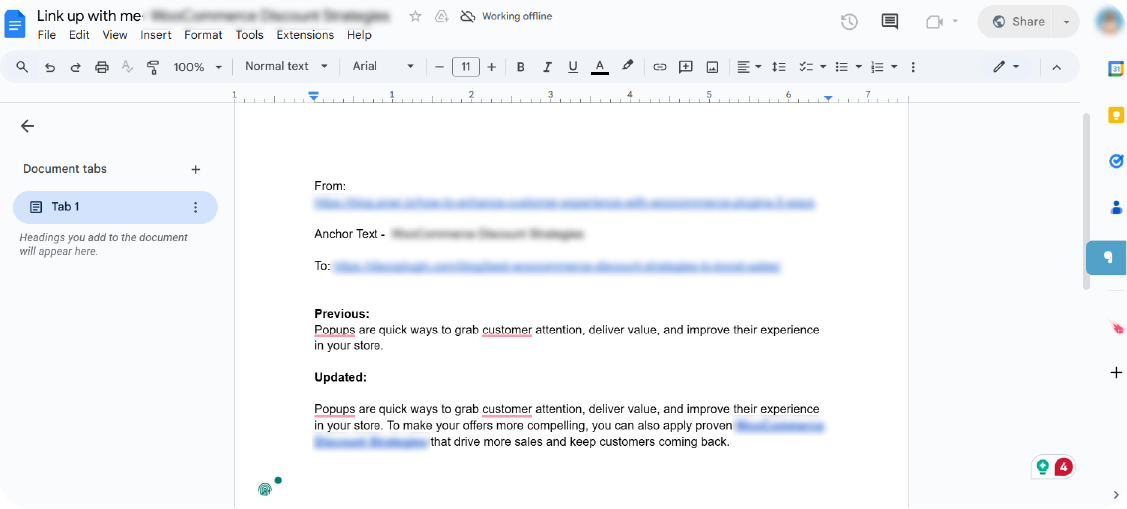
While this may seem like a small issue, it is an extra step we have to take. That’s not acceptable for us, as we prefer to keep all the information in one place—no back-and-forth.
Plus, imagine if you had 100 partners and most of them worked this way. It would be a nightmare, right?
So, if you run into such a situation, it’s better to discuss with your link partner and agree on one simple format for link requests.
One-Sided Link Exchanges with No Value
Link building is not just about getting backlinks, it’s also about building relationships that last and grow into a strong partnership.
However, strong partnerships thrive when both parties benefit. But sometimes, especially with newer link builders, the focus is so much on their own goals and deadlines that they forget about creating a mutual value.
If you’re always giving backlinks and getting few or none in return, it disrupts the backlink balance, which is something we can easily track with a simple spreadsheet for backlink management.
This isn’t fair, and usually such relationships don’t last long. Even though we do our best to be kind and helpful with partners, we also realize the importance of spotting when the balance is off. The sooner you do this, the faster you can take action.
Don’t get us wrong, we’re not saying you should give up on these partners. What we truly recommend is building a relationship where both sides benefit.
Conclusion
To wrap things up, spotting these link exchange red flags on time can protect your link building efforts and help you build strong partnerships.
Stick to working with reliable and honest partners, and you’ll see better results in the long run.
Thanks for reading, and good luck!
FAQ about link exchange red flags
Does Google penalize link exchanges?
Google may penalize you for excessive direct exchanges, which is why we recommend going with A-B-C exchanges that are safer.
What is the ABC link strategy?
A-B-C link exchange is a link building strategy where three websites (A, B, and C) exchange backlinks with each other.
What is link exchange on LinkedIn?
Link exchange on LinkedIn refers to connecting with relevant people on the platform and exchanging backlinks for improved SEO.


Quiz Time
Let's put your knowledge to the test.
Leave your email below to get a SayNine certificate!
Are you sure?