


Does link building actually work, and how long does it take? It’s a fair question to ask before committing to a campaign. So instead of answering with opinions, we went back through our own data to look at real link building results.
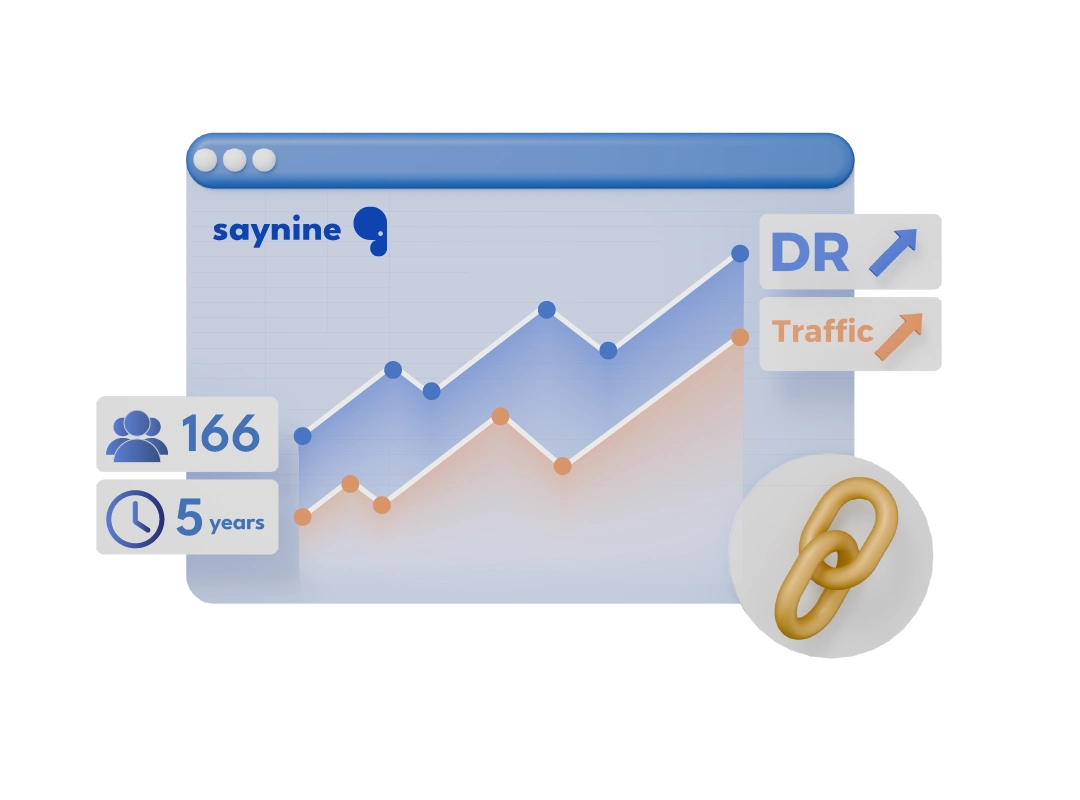
We looked at 166 clients and 180 domains we worked with between June 2021 and November 2026, covering more than five years of active link building. Then we tracked how each site’s Domain Rating (DR) and organic traffic changed from the first month we worked together to the last.
The short version is that time matters a lot, and consistency matters too. Here’s what we found.
A Quick Summary of What We Found
- Among established clients who stayed 6+ months, 90% grew their DR (63 of 70), by 10.6 points on average.
- Among established clients who stayed 6+ months, 76% gained at least 3 DR points (53 of 70), and the median time to reach +3 DR was 2.5 months.
- Lower-DR sites gained more points and grew faster: established 6+ month clients starting at DR 10 to 30 gained +23.5 DR points on average (+24 median), compared with +1.0 (+1 median) for sites starting at DR 71+.
- Among clients who stayed 12+ months, 93% grew their DR (38 of 41), and 81% grew their organic traffic (30 of 37).
- Among clients who stayed 24+ months, the median client grew organic traffic by 130%, 81% grew their traffic overall, and 56% at least doubled it.
- 79% of measured clients who left still had a DR in November 2026 at or above where it stood in their last month with us (85 of 107).
The key findings at a glance. Clients who stayed 6+ months saw steady DR gains, and long-term clients saw strong organic traffic growth too.
How We Ran This Study
In our regular client reporting, we use two main metrics from Ahrefs: Domain Rating (DR) and organic traffic. DR measures the strength of a site’s backlink profile, which is what link building directly works on, and organic traffic shows whether that strength turns into search visits.
Because Ahrefs gives third-party estimates rather than exact numbers from Google, using one tool across all 166 clients lets us compare everyone fairly. Here are the simple rules we used to keep the numbers honest:
- Before and after dates. We compared each client’s first month with us against their last month with us (November 2026 for active clients, or October 2026 in one case), using a 7-day median around each date so daily swings don’t skew the numbers. Only the 79% retention figure compares a former client’s last month with us against November 2026.
- Established sites only for time groups. Our time-based groups only count sites that started at DR 10 or higher, so brand-new sites don’t inflate the averages. Thirteen clients started below DR 10 (12 of them grew their DR), and 4 clients had no starting DR history in Ahrefs, leaving 162 measurable clients.
- 500+ visit starting baseline. For traffic results, we only counted clients starting with 500+ monthly visits and usable Ahrefs history, because tiny sites can show huge percentage jumps from just a few visits.
- Multiple domains and pauses. Clients with more than one site still count once (180 domains across 166 clients): DR follows their main site, and traffic combines their sites. When a client paused and returned, “active months” counts only working months, while total DR and traffic change spans from their first start to their final end.
- Per-client medians instead of combined totals. We use typical client medians rather than combined group visit totals, because a single massive client can skew the whole group’s sum.
For context, the median client stayed for 5 active months. Across all 166 clients, 46 stayed 12+ months, 19 stayed 24+ months, and 39 are still active. Because of the starting DR, 500+ visits, and Ahrefs history rules above, the client counts in the tables below are smaller than those totals.
The Longer Clients Stay, the More DR They Gain (+0.7 to +13.7 Points)
This is the clearest pattern in the data. In the first month or two, DR barely moves.
Figure 1. Average DR change by active months with us, established sites only (DR 10+ at the start). DR barely moves in the first two months, then climbs steadily the longer a campaign runs.
| Active Months With Us (DR 10+ at Start) | Clients | DR Grew | Average DR Change |
|---|---|---|---|
| 1 to 2 | 47 | 45% | +0.7 |
| 3 to 5 | 32 | 75% | +4.3 |
| 6 to 11 | 29 | 86% | +8.3 |
| 12 to 23 | 24 | 92% | +11.1 |
| 24 or more | 17 | 94% | +13.7 |
Notice that these five bands add up to 149 established clients (those starting at DR 10 or higher). The remaining 13 of the 162 measurable clients started below DR 10, and 12 of those 13 grew their DR.
If you’re judging a campaign after six weeks, you’re likely looking too early. Established clients who stayed 24+ months went from an average DR of 59.8 to 73.5, and 16 of the 17 grew.
90% of Clients Who Stayed 6+ Months Grew Their DR
Figure 1 shows how much DR changed. This one shows how likely it was to grow at all. Here, each time group counts every established client (DR 10+ at the start) who stayed at least that long, while the top row includes all 162 measurable clients regardless of starting DR.
Figure 2. Share of clients whose DR grew, by minimum active time with us. Nine out of ten established clients who stayed 6+ months grew their DR, and nearly half gained 10 or more points.
| Group | Clients | DR Grew | Gained 10+ Points | Median Change |
|---|---|---|---|---|
| All clients, any tenure (any starting DR) | 162 | 74% | 28% | +3 |
| Stayed 3+ months (DR 10+ at start) | 102 | 85% | 37% | +5 |
| Stayed 6+ months (DR 10+ at start) | 70 | 90% | 47% | +8 |
| Stayed 12+ months (DR 10+ at start) | 41 | 93% | 54% | +10 |
| Stayed 24+ months (DR 10+ at start) | 17 | 94% | 59% | +11 |
What stands out is how big the gains got, not just how common they were. Nearly half of established clients who stayed 6+ months (47%) gained 10 or more DR points, and 18 clients crossed DR 70 while working with us.
How Long Does It Take for DR to First Rise?
Knowing the end result helps, but most teams also want to know when movement starts. We checked the 70 established clients who stayed 6+ months, counting calendar months from day one (including any pauses).
Because a +1 point shift falls inside normal Ahrefs day-to-day movement, we treat +3 DR points as the first real gain. Three out of four clients in this group (76%, or 53 of 70) reached at least +3 DR, taking a median of 2.5 months.
Figure 3. Share of established 6+ month clients reaching DR milestones and median calendar months to get there. Most established campaigns reached their first meaningful +3 DR gain within 2.5 months.
| DR Rise Milestone | Reached By (6+ Months, n=70) | Median Months to Reach | Within 3 Months | Within 6 Months |
|---|---|---|---|---|
| +1 (within Ahrefs noise) | 96% | 1.1 | n/a | n/a |
| +3 (first real gain) | 76% (53 of 70) | 2.5 | 44% | 64% |
| +5 | 63% (44 of 70) | 3.8 | 29% | 43% |
Among clients who stayed 12+ months (41 clients), 80% reached +3 DR and 76% reached +5 DR. In short, most established campaigns take roughly two to four months before a clear DR gain shows up.
Do Low-DR Sites Grow Faster Than High-DR Sites?
Yes, both in total DR points gained and in points per active month. When we split the 70 established 6+ month clients by where they started, sites between DR 10 and 30 gained a median of 24 points (2.1 points per active month), compared with a median of 1 point (0.1 points per active month) for sites starting at DR 71 or higher.
Figure 4. DR points gained and monthly pace by starting DR band (established clients with 6+ months). Sites starting between DR 10 and 30 gained far more points per month than high-authority sites starting at DR 71+.
| Starting DR Band | Clients | DR Grew | Average Points | Median Points | Points per Active Month | Median Active Months |
|---|---|---|---|---|---|---|
| 10 to 30 | 11 | 100% | +23.5 | +24 | 2.1 | 10 |
| 31 to 50 | 16 | 94% | +15.2 | +16 | 1.2 | 12 |
| 51 to 70 | 26 | 96% | +8.6 | +8 | 0.4 | 20.5 |
| 71+ | 17 | 71% | +1.0 | +1 | 0.1 | 11 |
That works out to a +93% median DR jump for sites starting at DR 10 to 30, compared with +1.4% for sites starting at DR 71+ (a strong negative correlation, r = -0.77). Staying longer isn’t why: lower-DR sites actually had shorter median stays (10 months for DR 10 to 30 versus 20.5 months for DR 51 to 70).
Keep two things in mind here. First, the DR 10 to 30 group at 6+ months is small (11 clients, or 29 across any length). Second, moving up from DR 70 takes far more link authority than moving up from DR 20 because of how Ahrefs scores sites, so smaller point gains at DR 71+ reflect the scale itself.
81% of Clients Who Stayed 12+ Months Grew Their Organic Traffic
Traffic depends more on things outside link building, like content, site changes and Google updates. Still, most clients who stayed 12+ months grew their traffic (81%), and the longer they stayed, the bigger the median gain.
Figure 5. Per-client organic traffic change from first to last month worked (sites with 500+ monthly visits at the start). Over four in five clients who stayed 12+ months grew their organic traffic, with the largest median gains at 24+ months.
| Group (500+ Visits at Start) | Clients | Traffic Grew | At Least Doubled | Median Change |
|---|---|---|---|---|
| Stayed 6+ months | 63 | 64% | 29% | +26% |
| Stayed 12+ months | 37 | 81% | 43% | +58% |
| Stayed 24+ months | 16 | 81% | 56% | +130% |
| Current clients, 6+ months | 22 | 73% | 50% | +95% |
We use per-client medians rather than combined visit totals because one very large multi-site client accounts for 81.5% of starting traffic (811K of 995K) and 86% of net gain in the 24+ month group, largely driven by a site relaunch rather than steady growth on one domain. That same client also accounts for 73.9% of starting traffic and 94% of net gain in the current 6+ month group.
Looking at those groups without that single outlier shows the same per-client trend:
- 24+ months without the largest client (15 clients): 80% grew their traffic, 53% at least doubled it, and median growth was +121% (combined visits rose from 184K to 373K, or +102%).
- Current clients, 6+ months without the largest client (21 clients): 71% grew their traffic, 48% at least doubled it, and median growth was +86% (combined visits rose from 287K to 363K, or +27%).
If you’d like to see what a long-term campaign looks like up close, our EasyDMARC case study walks through one from start to finish.
We also checked how many clients hit their all-time-high organic traffic while working with us, and whether they held those gains through their final month:
- All-time highs (62 clients meeting both rules): Among clients who stayed 6+ months, started with 500+ monthly visits, and had at least 6 months of prior Ahrefs history, 68% reached their all-time-high organic traffic while working with us (42 of 62).
- Peak versus end-of-campaign growth: Peak traffic looks at the highest single month during a campaign, while overall growth compares the first month with the last. Eight of those 42 clients hit a peak while working with us and later dropped below their starting traffic before or after the campaign ended.
79% of Clients Who Left Kept Their DR After the Campaign Ended
It’s a common worry: if I stop building links, do I lose everything? Based on our data, mostly not. Of the 166 clients in the study, 39 are still active and 127 have left. Seventeen left less than three months ago (too early to tell whether their DR held) and three lacked a start-day DR baseline, leaving 107 former clients we could measure in November 2026.
Among those 107 clients, 79% (85 of 107) still had a DR in November 2026 at or above where it was in their last month with us.
Figure 6. Post-campaign DR retention and returning clients. Almost four in five ended clients kept or grew their DR after stopping, and over a third returned for another campaign.
| What We Measured | 結果 |
|---|---|
| DR in Nov 2026 at or above last month with us | 79% of measured clients who left (85 of 107) |
| Came back to work with us after a pause | 37% of all clients (62 of 166) |
What Happens When Clients Pause and Come Back?
Thirty-seven percent of our clients (62 of 166) paused their campaigns and returned later. Of those 62 returning clients, 61 have usable DR data and 51 have usable traffic data. To see what happened after they restarted, we measured DR inside their return stretches only and measured traffic from their first return month to their last month worked.
Figure 7. DR and organic traffic after clients returned from a pause, plus DR pace compared with never-paused clients. DR still climbed for most returning clients who stayed 6+ months, though at a slower monthly pace than uninterrupted campaigns.
| Returning Clients | DR Grew | Median DR Change | Traffic Grew | Median Traffic Change |
|---|---|---|---|---|
| All returning | 57% (35 of 61) | +1 | 47% (24 of 51) | -1.1% |
| Back 3+ months | 73% (30 of 41) | +2 | 41% (14 of 34) | -9.2% |
| Back 6+ months | 75% (21 of 28) | +5.5 | 50% (12 of 24) | -2.5% |
The two metrics behaved very differently after a return:
- DR usually picks back up with time. Across all returning clients, 57% grew their DR after coming back (median +1). For those who stayed back 6+ months, 75% grew their DR with a median gain of +5.5 points.
- Traffic does not clearly grow after a return. Only 41% to 50% of returning clients grew their traffic after restarting, and the median change stayed flat to negative (-1.1% overall, -9.2% at 3+ months back, and -2.5% at 6+ months back).
- Returning DR growth is slower per active month. Among established clients (DR 10+ at start) with 3+ active months, those who never paused gained a median of 0.56 DR points per active month (52 clients), compared with 0.33 points during return periods for returning clients (41 clients, p about 0.009). Across their full run, including the first stretch, returning clients gained 0.34 points per active month.
By campaign length, returning clients gained less total DR at 3 to 5 months (median +1 versus +6 for steady campaigns) and at 6 to 11 months (+2 versus +4.5), though those reaching 12+ months gained slightly more (+11.5 versus +8). One likely reason for the slower monthly pace on return is that early DR gains are easier to win than later ones, though our data cannot confirm that.
What This Means for Your Link Building Plan
- Plan for at least 6 months. In our data, established sites in the 6 to 11 month group gained +8.3 DR on average (compared with +0.7 in the first two months), and 64% of 6+ month clients grew organic traffic.
- Give DR at least 2 to 4 months before judging early progress. Only 45% of established clients who stayed 1 to 2 months grew their DR, and among 6+ month clients it took a median of 2.5 calendar months to gain 3 DR points (44% reached +3 within 3 months, 64% within 6 months).
- Give traffic more time than DR. Among clients who stayed 6+ months, 64% grew their organic traffic (median +26%). That rose to 81% at 12+ months (median +58%), and at 24+ months the median client grew 130%, with 81% growing traffic and 56% at least doubling it.
- Set expectations by starting DR. Sites starting at DR 10 to 30 gained a median of +24 DR points at 6+ months, while DR 71+ sites gained +1 point median. Higher-DR campaigns move in smaller increments.
- Avoid unnecessary pauses if momentum matters. Clients who paused and returned still tended to gain DR if they stayed back 6+ months (75% grew), but their DR pace was slower per active month than for steady campaigns (0.33 versus 0.56 points), and post-return traffic was flat to negative.
- Watch DR and traffic separately. They don’t always move together, and traffic also depends on your content, site changes, and how much search demand your topics have.
- Start with an SEO audit. An audit is part of every SayNine plan, so it can point out issues on your site that may hold back your results.
Here’s what Georgi Mamajanyan, CEO of SayNine, says about what clients can realistically expect:
“We don’t guarantee unrealistic outcomes like first place on Google in six months. Anyone making that kind of promise is not being honest with you. What we do guarantee is valuable, authoritative backlinks that meet our agreed metrics. Still, this study shows steady growth in metrics like DR and organic traffic, and that growth was stronger the longer a site worked with us.”
If you’d like to see what a campaign could look like for your site, you can compare our リンク構築パッケージ. You can also learn more about how we work on our リンクビルディングサービス page.
Limitations of This Study
We want to be upfront about what this data can and can’t tell you:
- Ahrefs estimates only, with no rankings, link counts, or AI visibility. This study tracks Ahrefs DR and organic traffic estimates only, not Google Search Console data, monthly links placed per client, top 10 keyword rankings or AI search visibility.
- Missing baselines and multi-site exclusions. Four of the 166 clients lacked starting Ahrefs DR history and are left out of DR counts, and two multi-site clients are left out of the 12+ and 24+ month traffic groups because their second domain lacked early traffic history. Including those two clients’ main sites would only lower the 12+ month traffic share from 81% to 79% and the 24+ month share from 81% to 76%.
- Small subgroups. The 24+ month groups have 16 to 17 clients, and the DR 10 to 30 band at 6+ months has 11 clients, so treat those figures as a useful signal rather than a precise average.
- Harder gains at higher DR. Moving up from DR 70 requires far more link authority than moving up from DR 20, so smaller point gains on higher-DR sites partly reflect how the Ahrefs scale works.
- Correlation, not proof. These numbers show what happened while clients worked with us, not proof that links alone caused it. Content updates, site changes, and Google algorithm updates affect DR and traffic too.
- Who stays longer. Clients who stay longer may also be the ones investing more in SEO overall, so the long-term groups may not look exactly like the average site.
Use Our Data
Feel free to use any chart from this study. Just link back to this page as the source.
Source: SayNine analysis of Ahrefs Domain Rating and organic traffic estimates, June 2021 to November 2026.
FAQ about link building results
How long does it take to see link building results?
In our study of 70 established clients who stayed 6+ months, 76% gained at least 3 DR points, taking a median of 2.5 calendar months to reach that mark (64% within 6 months). Organic traffic typically took longer to build: 64% of 6+ month clients grew traffic (median +26%), rising to 81% at 12+ months (median +58%) and a +130% median at 24+ months.
Do you lose your Domain Rating if you stop link building?
Mostly no. Among 107 measurable clients who ended their campaigns at least three months before November 2026, 79% (85 of 107) still had a DR in November 2026 at or above where it stood in their final month with us.
Do low-DR websites gain more from link building than high-DR websites?
Yes, in our dataset. Among established 6+ month clients, sites starting at DR 10 to 30 gained +23.5 DR points on average (+24 median, or 2.1 points per active month), while sites starting at DR 71+ gained +1.0 point on average (+1 median, or 0.1 points per active month). However, the 10 to 30 group only has 11 clients, and higher DR scores are harder to move by design.
What happens if you pause a link building campaign and come back later?
DR often starts growing again, though more slowly than in steady campaigns, while organic traffic does not clearly grow after a return. Among 61 returning clients with DR data, 57% grew DR after restarting, and 75% grew DR if they stayed back 6+ months, at a median pace of 0.33 DR points per active month compared with 0.56 for clients who never paused. Only 47% of 51 returning clients grew organic traffic after returning, with a median change of -1.1%.