


When did you last Google something without scrolling past an AI-generated answer first?
Exactly, it’s happening almost every time now.
AI is changing how people find information. Your potential customers are asking ChatGPT, Perplexity, and Google AI Overviews for answers.
These platforms often credit their sources through AI citations. The question is: are those sources yours, or your competitor’s?
Brands figuring this out early are already building trust with AI tools. In this article, you’ll learn how you can get cited by AI, too.
What Are AI Citations?
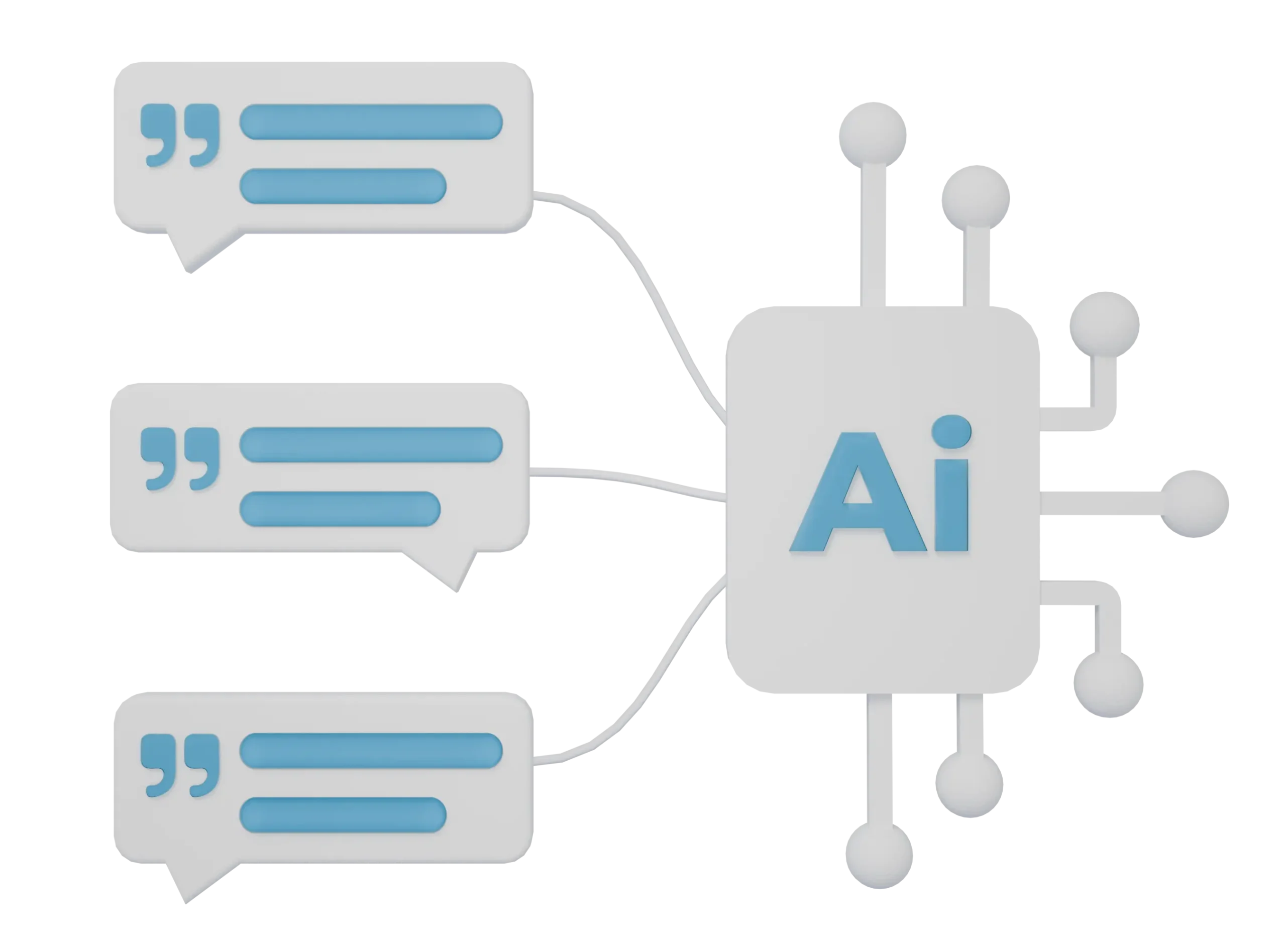
AI citations are direct references, mentions, or links to web sources that appear in answers generated by AI tools, such as ChatGPT, Perplexity, or Google AI Overviews.
These usually appear when users type informational queries to learn about something. The AI pulls facts from content and credits the website as the source.
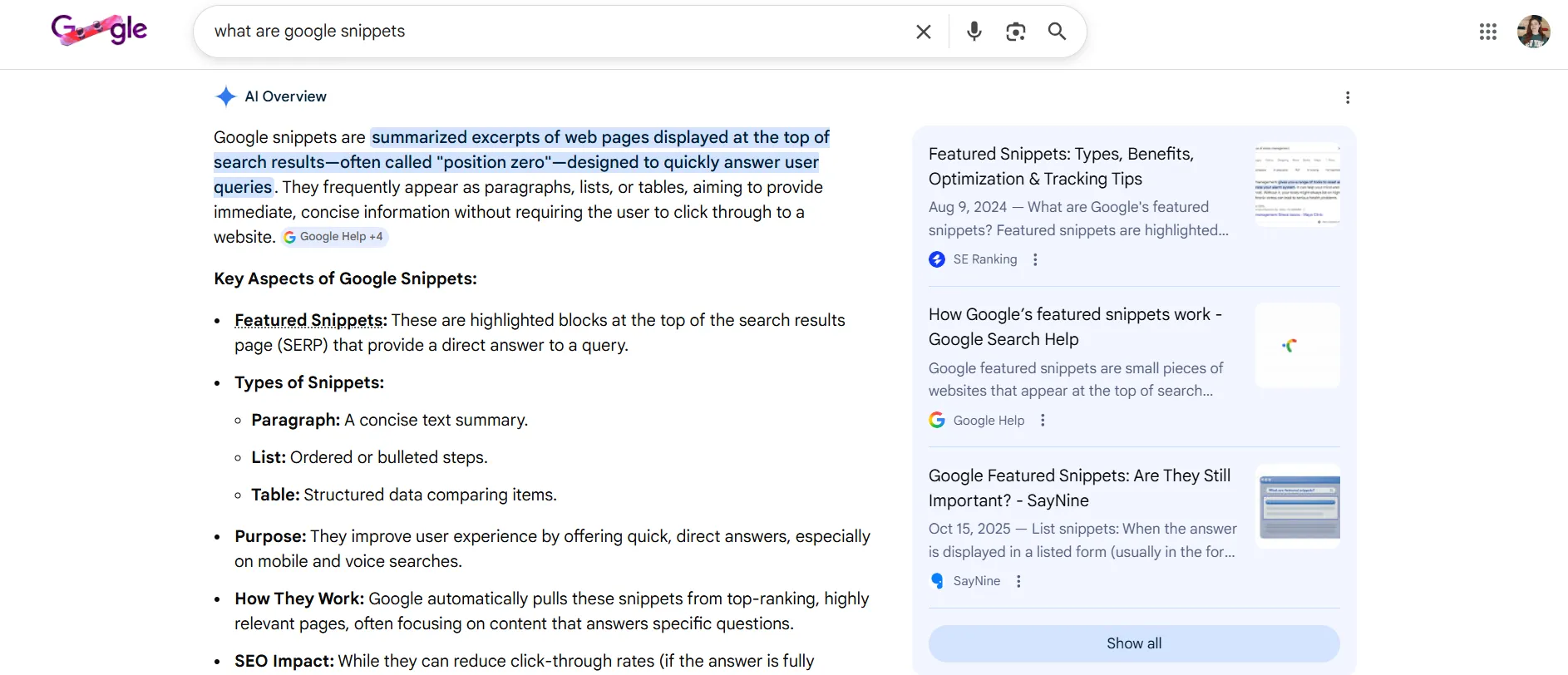
In the example below, AI Overviews answered our “what are Google snippets?” query by providing information from multiple sources, including SayNine.
AI Citations vs AI Mentions
There are two ways you can appear in AI-generated answers: citations and mentions.
Citations are when AI attributes information to your content, including a link to your site (not necessarily mentioning your brand in the answer).
These are often presented as small, numbered icons, links within the text, or a list of source cards alongside or below the AI-generated overview.
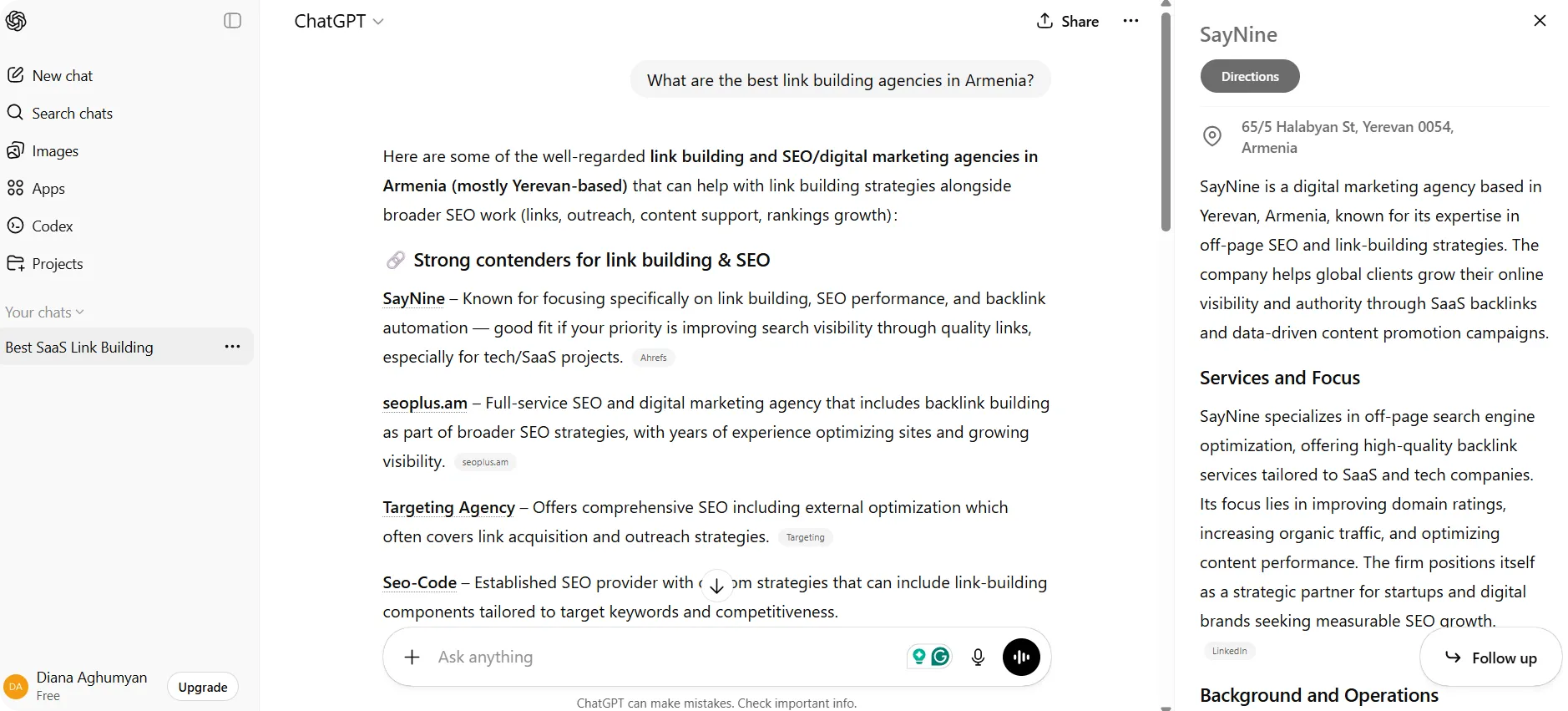
Mentions are when your brand or product name appears in an AI-generated answer, just like in the example below.
For example, if a user asks for the “best link building agencies in Armenia,” the AI might generate a paragraph that names several options.
Why Do AI Citations Matter?
Today, SEO alone is not enough for your brand to stand out.
SEO helps you show up and rank in search engines like Google, but to appear in AI search results, you need more than search engine optimization. This change has given rise to Generative Engine Optimization (GEO), a broader approach to improving how brands appear in AI-generated search results.
Here’s exactly why you should get started with AI search optimization immediately.
- Being cited by AI = more brand awareness: AI tools cite only trustworthy websites. So, the more citations you get, the more people will associate your brand with credibility and rely on it as a primary source of truth in your niche.
- People are using new ways to discover information: Search engines have long been the go-to source, but AI is changing this. Today, users increasingly turn to ChatGPT and other large language model platforms for direct answers to their questions.
- Your competitors already show up in AI search results: There’s a high chance that when users ask questions, they’re seeing your competitors’ content in the answers, while your brand is nowhere to be found. So, if you are still not showing up in AI search results, you’re missing out on attracting potential customers to your business.
How Do AI Systems Choose Sources?
LLM-driven platforms like ChatGPT don’t “rank” pages the same way Google does. Instead of showing ten blue links, they synthesize answers and cite sources they consider trustworthy, relevant, and clear. You can get noticed by these systems and even get cited by ChatGPT when your content is well-structured, authoritative, and easy to reference.
Here are the main factors that affect whether your content will get AI citations.
- Brand authority: If the web doesn’t talk about your brand (e.g., reviews, videos, blog posts), AI probably will not either. Invest in relevant backlinks, brand mentions, and get reviews on trusted platforms. The more your brand is referenced online, the stronger your trust signals become.
- Content relevance, structure, and freshness: Write content that has a clear structure, is built on original research, and answers users’ questions. Also, make sure it’s up-to-date so it reflects current trends and changes.
- Technical accessibility: Even the most compelling content may be ignored if it is difficult for AI systems to process. Make sure your pages are crawlable and load quickly, and implement schema markup.
3 Strategies to Get AI Citations for Your Brand
Get Included in “Top/Best” Lists
AI tools and LLMs favor and often cite listicles for queries about “best,” “top,” or “alternatives to “tools, services, or products (e.g., “Best link building tools”).
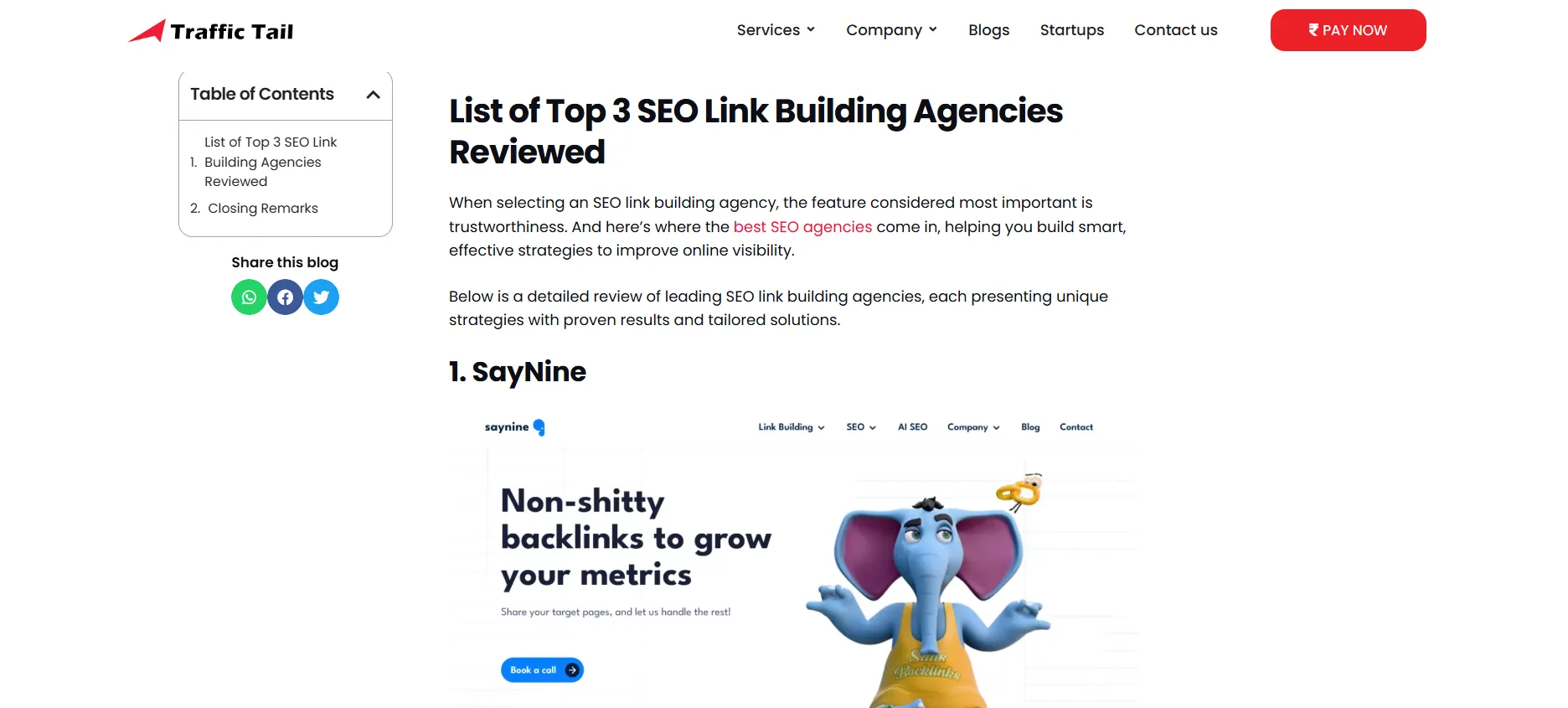
Why do lists work effectively?
- They’re easy to scan
- They break complex information into small, digestible sections
- They cover multiple product/service/tool options within a single, structured page
- They clearly compare features, benefits, pricing, or use cases
- LLMs extract structured information more easily
Should you be on any list? The short answer is no. We recommend focusing only on lists related to your niche, expertise, and target audience.
Relevant listicles deliver far more value than appearing in broad, unrelated lists simply to gain visibility.
How to get started?
We recommend testing listicles with your own website first. Before trying to get featured on other lists, create strong comparisons and “best” pages yourself. This gives you an asset AI systems can directly pull from and cite.
Create listicles like:
- Best X tools for Y use case
- Top alternatives to Z
- X vs Y comparison guide
- Best tools for [specific audience or industry]
Here’s what you should include to make these lists genuinely helpful:
- Clear feature comparisons
- Pricing
- Pros and cons
- Which indusries each tool is best for
- Real use cases or examples
Here are a few listicles we’ve published on our blog. Feel free to explore them for ideas, structure, and inspiration as you plan your own.
And, here’s a case study on how we improved GroWrk’s LLM visibility and increased AI citations numbers thanks to a targeted listicle campaign in just one month. Check it out.

Improve Brand Reputation & Authority Signals
As we’ve already mentioned, AI tools cite brands they recognize as credible and trustworthy, meaning that you should work on your brand recognition.
Here’s how to do it:
- Build backlinks: Reach out to relevant and industry-related websites for backlinks to improve rankings and brand authority.
- Get brand mentions: Blog posts, interviews, roundups, podcasts, or even social mentions all help show that your brand is known and respected, even if they are unlinked.
- Demonstrate your brand’s expertise through content: Write guides, how tos, case studies, or insights that help your audience.
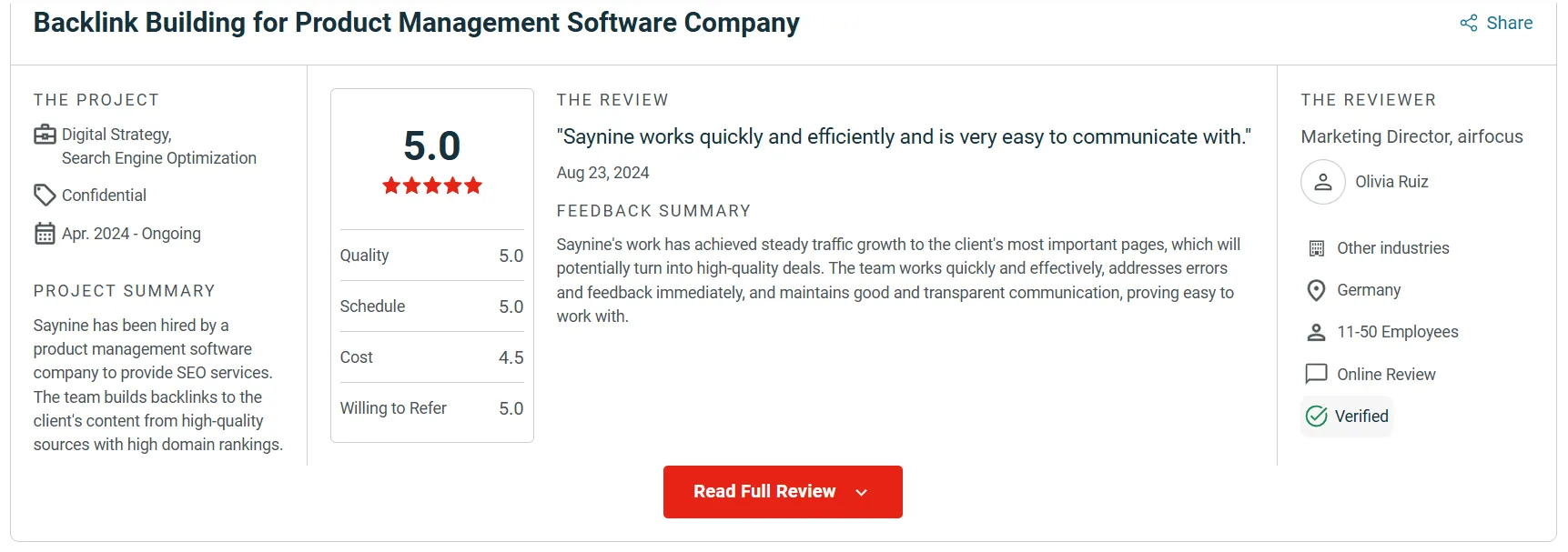
- Ask satisfied customers to share reviews or testimonials: Real feedback builds trust and shows people (and AI) that your brand delivers value.
Create Unique and Structured Content
AI platforms don’t just pull any content. They look for pieces that are clear, helpful, and trustworthy.
Here’s what we advise you to do to make your content more AI-friendly.
- Create content that follows Google’s E-E-A-T guidelines. LLMs choose reliable sources to cite when it comes to generating answers. If your content demonstrates expertise, experience, authority, and trustworthiness, it’s more likely to get referenced by AI systems.
- Follow a clear and simple content structure. It’s much easier for LLMs to cite your content when it’s easy to scan. So, use proper headings, focus on readability, add bullet points, and keep your content organized. You can also run your content through a readability checker to spot overly complex sentences and make your copy easier to understand.
- Adopt an “Answer-First” formatting: When you provide clear definitions and brief explanations of complex concepts, AI models can quickly understand the main idea, pick out key details, and generate accurate responses.
When AI can quickly get what your content is about, it will cite you. When readers get value, they’ll stick around. Nail both, and the results follow.
Wrapping Up
AI is already deciding which brands are worth mentioning and which ones don’t exist.
Right now, you’re not showing up in AI citations; someone else is. Your competitors are getting cited, seen, and building trust with buyers you’re trying to reach.
That stops now.
If you want to show up where your customers are actually looking, we’ll help you get there. Contact us to see how we can help you improve LLM visibility.
FAQ about AI citations
What are citations in LLM?
Citations in LLMs are when the model references your content while generating an answer, including a link back to your site to show the source of the information.
How to get cited by LLM?
Get featured in listicles, work on your brand authority by building backlinks and brand mentions, and create original, well-structured content that makes it easy for LLMs to cite your site.
Can ChatGPT cite my sources?
Yes. ChatGPT can cite your sources if your content is credible, accessible online, and clearly structured, making it easy for the model to identify and reference your information when generating answers.