


“I have a new website with no authority. How do I take it from the ground up? Can backlinks help, and how and when should I invest in link building?”
This is one of the most common questions I get, usually from companies who have already spent months on tactics that didn’t deliver real results.
Here’s what actually works and how long it takes, honestly.
Is Your New Website Ready For Link Building?
First things first. In 2026, backlinks still matter. Valuable, relevant ones, at least. But does that mean your new website should already be investing in link building?
Check a few things before you start building backlinks.
- Your revenue streams: Look at where your revenue comes from now. If your target audience is on social media, you may want to invest in influencer marketing instead of link building.
- Your budget: As a new business, you probably have a small link building budget, so be careful about which strategies you invest in. If you already have at least one source of revenue, SEO can be a good second one to add. Keep in mind that ROI (return on investment) can be hard to predict early on because results depend on many factors, which will be covered later.
- Your ad spend: If you’re already running PPC ads, link building can help you turn some of that paid traffic into organic traffic, so you rely less on ads over time.
3 Steps To Build Authority For New Websites
Step 1: Run a Site Audit and Fix Technical Issues
Before getting your first backlinks, make sure your website is healthy and has no technical issues.
Yes, that’s possible even with a limited budget.
SayNine’s Free SEO Audit tool can help you at this stage to find your site’s on-page and technical SEO issues that could prevent your website from ranking higher.
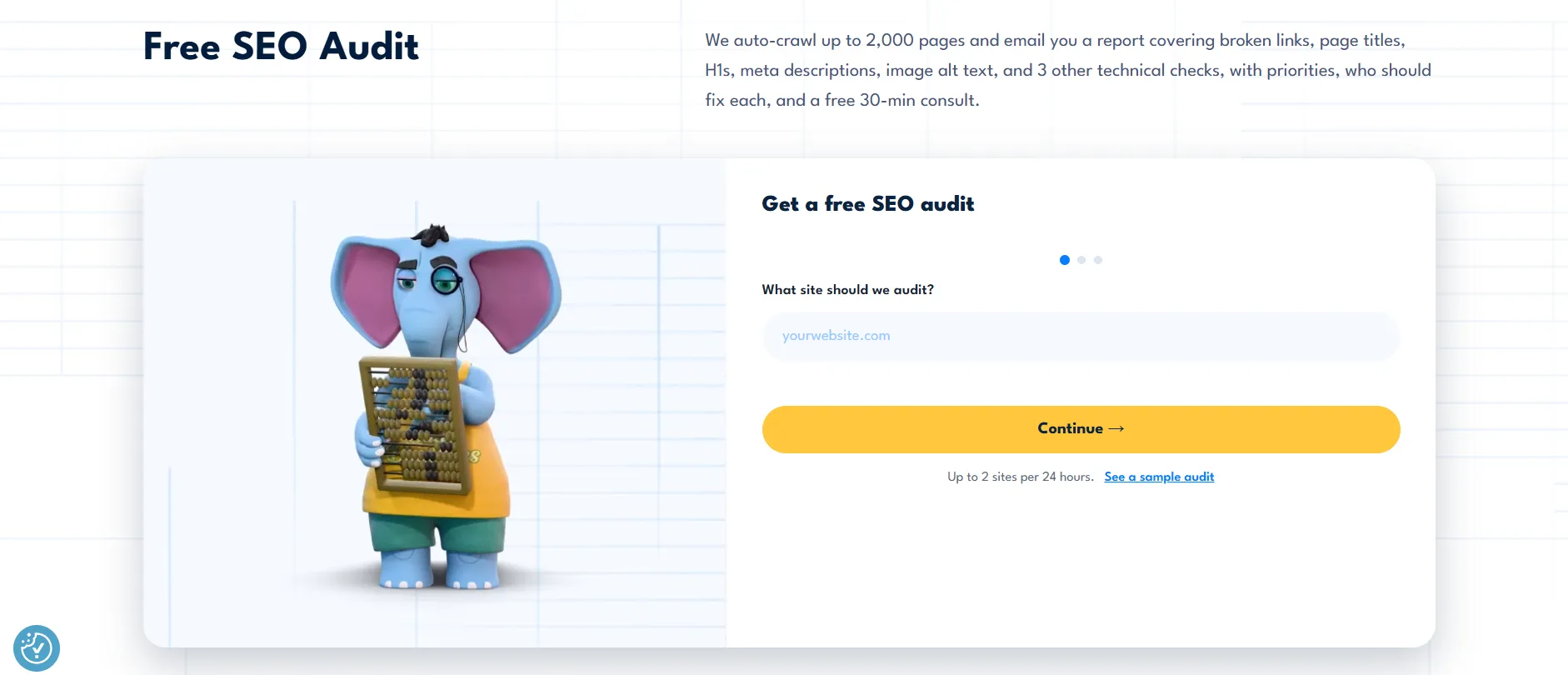
It will help you find basic issues and see which issues need help from a developer, SEO specialist, or content team. You don’t need an SEO team to do this.
Here are the steps:
Step 1. Enter your website: Go to the tool and type in the site you want audited.
Step 2. Add your name and email: This is where your report will be sent.
Step 3. Run the audit: Your new site may not have many pages, but the tool crawls up to 2,000 pages on your site.
Step 4. Wait for your report: It arrives in your inbox in about 15 minutes to an hour, so check your Promotions or Updates folder if you don’t see it right away.
Step 5. Review the findings: Your report flags 8 common issues, like broken links, missing page titles, missing H1 tags, weak meta descriptions, missing image alt text, and slow-loading images. Here’s a sample of what an SEO audit report looks like.
Step 6. Prioritize fixes: Each issue is labeled Critical or Nice to Fix, so you know what to solve first.
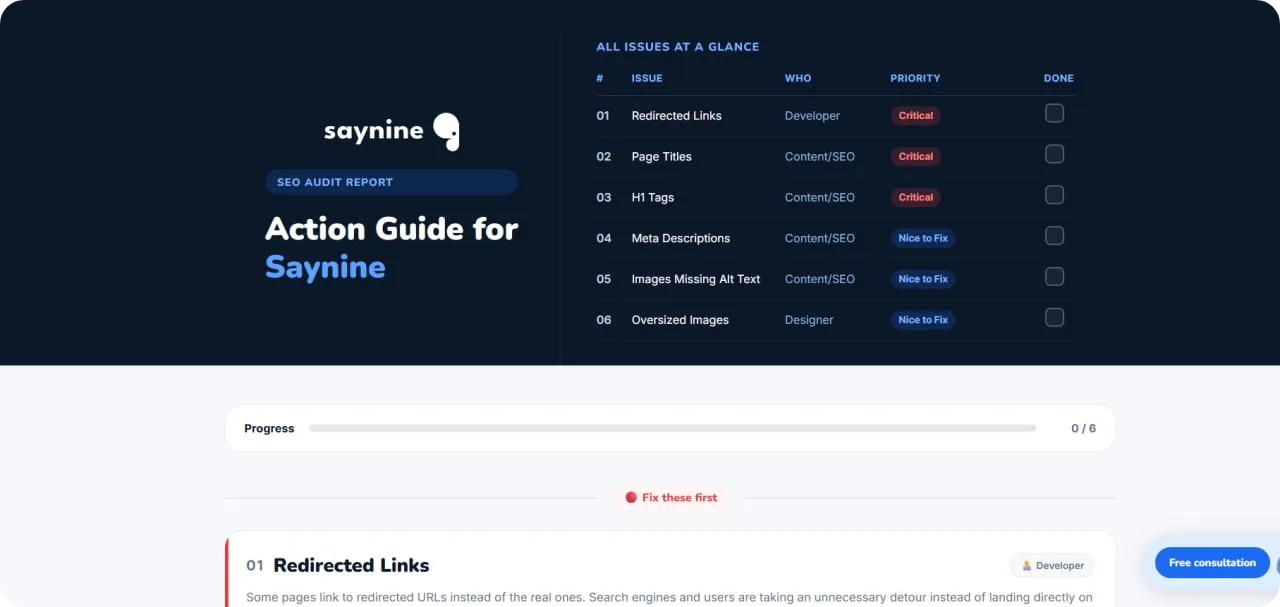
What’s important is that you don’t need a big SEO team to fix these issues.
You also get a free 30-minute consulting call with me to walk through the fixes, get guidance, and prioritize your roadmap.
Step 2: Create Unique and Helpful Content
After fixing your site’s on-page issues, you should focus on writing content for your new website that’s useful and adds value to your target audience.c
It is at the core of your SEO success. So, create content in two directions: blog posts and landing pages.
Let’s say your product is a free SEO tool. You could create a blog post that covers these questions:
- Why do SEO tools matter?
- What other free SEO solutions are available?
- How is your tool different from its alternatives?
- How does this SEO tool work, and what features does it have?
In other words, create original content that shares your experience and expertise.
This type of content is extremely helpful to readers. It not only ranks well but may also attract backlinks organically over time.
To create it, I recommend hiring in-house content specialists who learn everything about your product and create unique, SEO-friendly content around it.
This should be an ongoing process for you.
Step 3: Start Building Backlinks That Actually Work
If you already have a healthy website and helpful, valuable content, it’s time to invest in link building.
You have two options here: outsource link building or do it in-house.
Option 1: Outsourcing
If you outsource to an agency, they most likely won’t do things differently just because your site is new. The link building process stays the same either way. At least this is true for us.
When working with you, let’s say you have a new SaaS website; our packages and steps for link building stay the same.
The only difference is that getting backlinks can be more challenging at the beginning if your website has little to no authority, such as a very low or 0 DR, so our team may need to put in more effort. But that shouldn’t concern you. In the end, you get:
- Backlinks from DR 50+ domains with 1,000+ monthly traffic
- Unique, permanent, dofollow, editorial links
- Target page planning and anchor text strategy
- Access to client platform for easy backlink tracking
- Monthly SEO report
- Human-written content
- 12-month free link replacement
- A dedicated client success manager to assist you throughout the campaign
- Simple invoicing
- Communication on your preferred channel (Email, Slack, LinkedIn, WhatsApp, and Telegram)
P.S. Once your website gains some authority, usually within the first few months, it becomes much easier to build backlinks from other websites.
Option 2: In-House
Now, what about the second case: if you don’t want to outsource or don’t have enough budget? What do you do then?
If you want to do link exchanges and your website has no authority, most websites will reject a link exchange with you. It’s because they don’t want to link to a new or low-authority domain.
I suggest starting with a simple A-B-C link exchange in this way.
- Find a link source: Look for a site in your niche that sells backlinks.
- Buy a small batch: Start with around 10 links at a fair price, since a small batch keeps costs low.
- Exchange the links: Offer the website you bought a link from to another relevant site owner in your industry. In return, that site owner links back to your website.
One SEO specialist can handle all this, or you can do it yourself if resources are limited.
How Many Backlinks Should You Get as a New Website?
Don’t get too many backlinks at once if you don’t have any yet; grow step by step. That’s advice you’ll find all over Google when you search this topic.
But there’s more nuance to it. The real problem isn’t quantity; it’s the type of backlinks you’re getting.
If they’re toxic backlinks, we don’t recommend even one. Not one.
But backlinks from relevant websites are a different story. There’s no harm in getting more of those, since the pool of these sites willing to link to you is limited anyway. And realistically, so is your budget.
How Long Until You See Results?
Don’t make the common mistake of setting big goals without mini milestones along the way. Take small steps instead: going from a few redirects down to 0, or from no articles to a few indexed ones. These are small wins worth tracking, even before you see traffic move.
The same logic applies to blog posts. If you only have a few so far, don’t expect much traffic or conversions yet; there’s a big gap between having a handful of posts and seeing real results, and closing that gap takes time.
Backlinks follow the same pattern. Results build up gradually, not overnight.
That’s why it helps to ask: how long do backlinks take to work? Honestly, there’s no fixed timeline we guarantee for our clients. What results you’ll actually see depends on your site, its content, how consistent your link building is, and how competitive your market is. When working with us, if things go well, you’ll get a clean report showing it. If they don’t, we’ll audit the likely issues and often help fix them.
But when it comes to results, you shouldn’t just focus on DR. Look at the bigger picture too: is your site indexed, are rankings slowly improving, is traffic starting to come in? Do the right things, and the answers to all those questions will be positive.
Can You Stop Building Backlinks After a While?
Again, you may find many people say how important it is to get backlinks regularly, and not to stop after getting some.
But while this is generally true, there’s more nuance to it too.
Your website didn’t get “addicted” to backlinks. The issue here is how competitive your market is.
Let’s discuss a situation: your new website gets 30 backlinks, gains some authority, and then stops getting backlinks. After a while, rankings will drop. This is what typically happens: the reason isn’t that you stopped getting backlinks; it’s that you stopped while your competitors kept getting them regularly.
So, if your market is competitive, try not to stop. If you stop and your competitors don’t, they’ll obviously outrank you.
To Wrap Up
How do you do link building for a new website the right way?
This is one of the most important questions.
My advice: set clear goals, regularly create compelling content, and get valuable backlinks, all while making sure your site stays healthy and free of on-page and technical issues.
Hopefully, this article explained how to do exactly that and helps you build authority for your website over time.
If you need any help along the way, contact us. Our team and I will be happy to answer any questions you have about our services.
FAQ about link building for new websites with no authority
How can I effectively build backlinks for a brand-new website with no existing authority?
For a brand-new website, first fix technical SEO issues and create helpful, original content. Then start building backlinks gradually. Focus on the relevance and quality of your backlinks rather than simply getting as many as possible.
Are backlinks still relevant in 2026?
Yes. Backlinks remain a core trust and authority signal for search engines, but quality and relevance matter far more than volume.
How long before backlinks affect rankings?
There’s no fixed timeline anyone can guarantee here. It depends on your site, its content, how consistent your link building is, and how competitive your market is.