


Google demeure le moteur de recherche principal utilisé par les gens, mais ils se tournent également vers les moteurs de recherche IA pour trouver des réponses. Google voit environ 13,7 milliards de recherches par jour. ChatGPT, quant à lui, gère environ 2,5 milliards de requêtes quotidiennes, bien qu'une fraction seulement soit des requêtes de type recherche. Quoi qu'il en soit, la recherche par IA est désormais trop importante pour être ignorée.
Si vous voulez que votre entreprise réussisse en ligne, comprendre les différences entre le GEO et le SEO devrait être votre priorité. Pourquoi ? La raison est qu'ils suivent tous deux des stratégies uniques.
Nous vous expliquerons comment ils sont différents, mais aussi similaires. Avant cela, consultez le tableau de comparaison ci-dessous.
| SEO | GEO | |
|---|---|---|
| But | Se classer plus haut sur les SERP | Faire citer et recommander votre marque par des plateformes d'IA |
| Sortie de la requête | Une liste de liens cliquables | Résumé des réponses extraites et générées à partir de plusieurs sources |
| Format de requête | Mots-clés (généralement des mots-clés courts) | Longues questions ou invites |
| Optimisation | Cibler les bons mots-clés, investir dans services de création de liens, ou le guest blogging, et l'optimisation des aspects techniques de votre site web | Investir dans les mentions de marque Être inclus dans des listes à puces Structurer le contenu facilement extractible par des modèles d'IA |
| Indicateurs à suivre | DR, trafic organique, backlinks, CTR | Citations IA, mentions IA, trafic de référence IA |
Qu'est-ce que le SEO ?
L'optimisation pour les moteurs de recherche (SEO) est le processus d'optimisation de votre site Web ou de votre contenu afin qu'il se classe plus haut sur les moteurs de recherche.
C'est l'une des stratégies de marketing numérique traditionnelles (et relativement anciennes) visant à améliorer l'autorité d'un site Web, à générer du trafic et à augmenter les conversions.
Pour en savoir plus sur le SEO, regardez cette vidéo sur le SEO et ses types ci-dessous :
Qu'est-ce que GEO ?
L'optimisation pour les moteurs génératifs (GEO) aide votre contenu à apparaître et à être cité dans les réponses générées par les modèles d'IA.
C'est une stratégie relativement nouvelle, maintenant que la recherche par IA est devenue une réalité.
Dans GEO, la façon dont votre contenu est écrit, structuré et dont votre marque est promue en ligne importe davantage à l'IA.
SEO vs GEO vs AEO
Les gens confondent souvent le sens de GEO avec celui de AEO (Answer Engine Optimization), mais ces deux concepts ont des objectifs d'optimisation différents.
L'AEO consiste à présenter votre contenu en réponse directe à la question recherchée dans des boîtes de réponse comme les extraits optimisés.
Essayez de rechercher une question spécifique sur Google. Vous voyez ensuite une réponse directe mise en évidence dans les aperçus IA à votre question. C'est ainsi que fonctionnent les AEO.
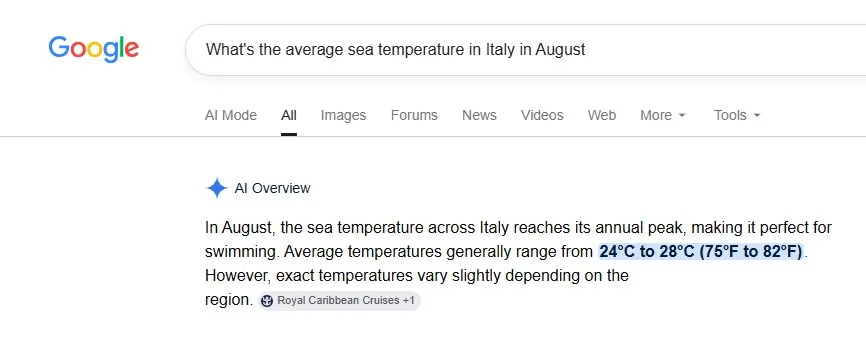
Alors, voici un bref résumé pour vous aider avec toute cette confusion de termes.
- Référencement naturel Augmente la visibilité d'un site web sur les pages de résultats des moteurs de recherche et développe son trafic organique.
- Géo : Augmente la visibilité d'une marque dans le domaine de l'IA (grâce aux mentions et aux citations IA) et la positionne comme une source faisant autorité.
- AEOC Optimise le contenu pour l'afficher comme réponse directe à une question spécifique, principalement sur extraits en vedette ou d'autres champs de réponse.
Revenons maintenant à la comparaison SEO vs GEO.
GEO vs SEO : Principales différences
Voici où GEO et SEO diffèrent principalement :
But
En SEO, votre objectif est de vous classer plus haut sur les moteurs de recherche comme Google et d'apparaître dans les 10 premiers résultats. Ou si vous débutez, vous vous concentrez au moins sur l'obtention d'une visibilité en ligne suffisante. Ainsi, votre plateforme cible est Google (ou d'autres moteurs de recherche traditionnels).
Dans GEO, vous optimisez votre site Web pour les moteurs de recherche IA (comme ChatGPT, Gemini ou Claude). Ici, votre objectif est d'être cité et recommandé par les moteurs de recherche IA en tant que source.
Format de requête
Les questions que les gens recherchent diffèrent également en fonction du moteur de recherche. Sur Google, les gens tapent principalement des mots-clés courts contenant 3 ou 4 mots, car Google liste ensuite les sources qui contiendront ces mots-clés.
Lors d'une recherche IA, les gens peuvent poser des questions plus longues, des phrases, ou insérer des consignes plus longues et obtenir des réponses conversationnelles résumées.
Sortie de la requête
Après que les gens aient tapé leurs mots-clés, Google liste ensuite les meilleurs résultats qui correspondent le plus à ces mots-clés. Il s'agit d'une liste d'hyperliens bleus cliquables, sur lesquels les utilisateurs peuvent cliquer pour obtenir des informations supplémentaires. Et étant donné que votre site Web peut également apparaître dans cette liste, c'est un moyen direct d'obtenir du trafic organique grâce à ces clics.
D'un autre côté, les moteurs d'IA fournissent une réponse textuelle résumée (incluant généralement aussi des images ou des vidéos pertinentes) générée à partir de plusieurs sources Web. Et comme les gens obtiennent des réponses à leurs questions sous un format résumé, ils terminent généralement leur recherche et ne cliquent pas sur les liens sources. Cela conduit à un phénomène de “ zéro clic ”, qui réduit considérablement le trafic vers un site Web.
Cependant, être recommandé par l'IA augmente la notoriété de la marque. Après avoir découvert votre marque grâce à l'IA, les utilisateurs peuvent ensuite effectuer une recherche de marque sur Google, ce qui peut également générer du trafic vers votre site web.
Données expertes rapides : Ahrefs a collecté des données de trafic provenant de 74 752 sites qui ont rejoint son outil Web Analytics d'ici juin 2025. Ensuite, ils ont fait une IA vs analyse du trafic de recherche pour suivre les changements globaux de la source de trafic.
Basé sur l'analyse :
- La recherche traditionnelle a généré 359,4 millions de visites.
- Les assistants IA ont généré 5,0 millions de visites.
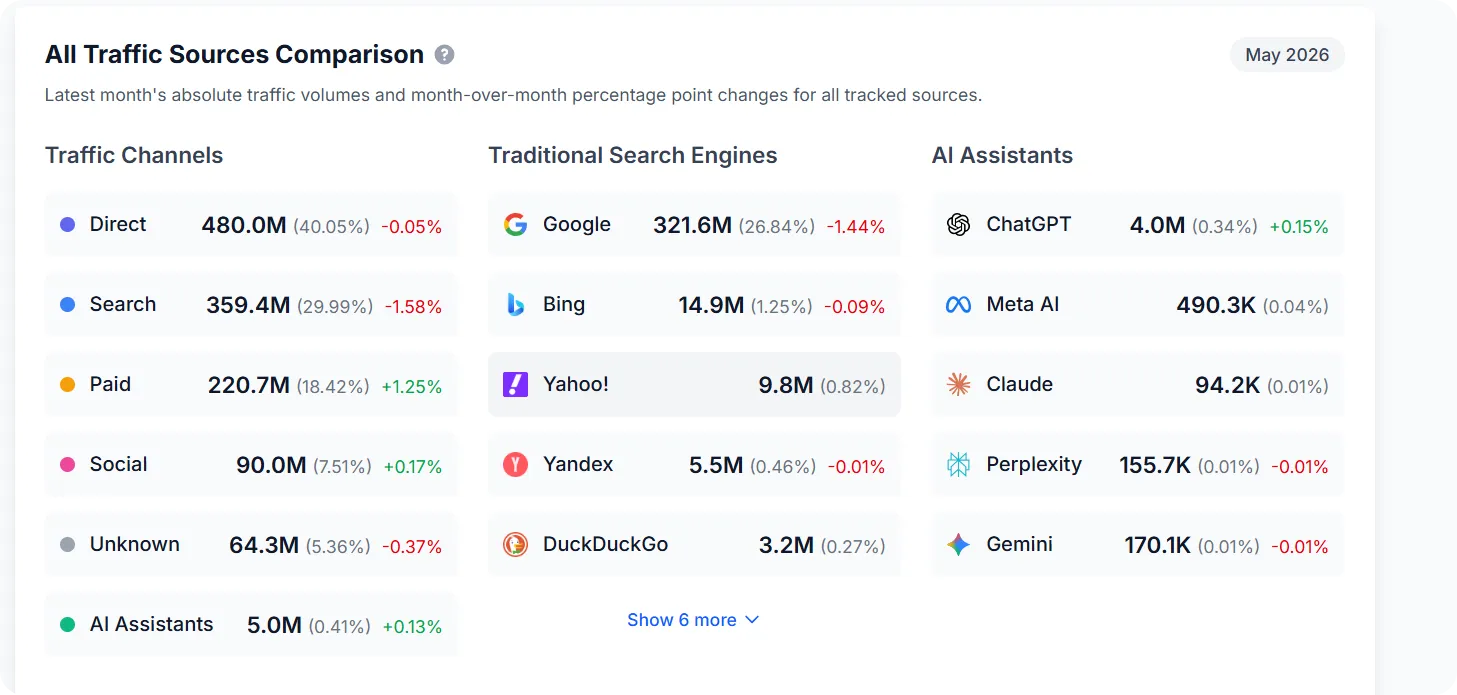
C’est la tendance qui importe davantage que l’écart brut. La part de Google dans le trafic total est passée de 35,11 TP3T en juin 2025 à 26,81 TP3T en mai 2026, passant sous la barre des 271 TP3T pour la première fois depuis le début du suivi. Dans le même temps, le trafic provenant de l’IA continue de grimper : rien qu’en mai 2026, ChatGPT a bondi de +59,4% par rapport au mois précédent, doublant presque sa part de trafic, alors même que Gemini (−20,7%) et Perplexity (−18,0%) ont reculé.
Le plat à emporterLe trafic IA est encore faible en termes absolus, mais il connaît une croissance rapide. La propre recommandation d'Ahrefs est de diversifier les sources de trafic plutôt que de dépendre d'une seule.
Optimisation et mesures de succès
En SEO, vous suivez un ensemble de SEO on-page et SEO off-page Tactiques pour apparaître dans les premiers résultats des SERP, y compris :
- Optimisation de votre site web ou de votre contenu par le placement stratégique de mots-clés de classement dans les titres, les sous-titres et les balises meta.
- Développer fort Liens internes afin que les moteurs de recherche puissent trouver et indexer vos pages facilement.
- Créer des backlinks à partir de sources fiables pour améliorer l'autorité de votre site web et vos positions dans les SERP.
- Création d'une schema markup pour aider les moteurs de recherche à mieux comprendre votre contenu ou la structure de votre site web.
- S'assurer que votre site web est à jour, que le contenu (y compris les articles, images ou vidéos) se charge rapidement et qu'il est adapté aux mobiles.
Pour les entreprises SaaS B2B, la mise en œuvre de ces tactiques nécessite une approche stratégique, une expertise spécifique au secteur et des conseils. Si vous recherchez de l’aide, il vaut la peine de vous tourner vers eux. Des agences de SEO expérimentées, qui sont comparés dans notre guide.
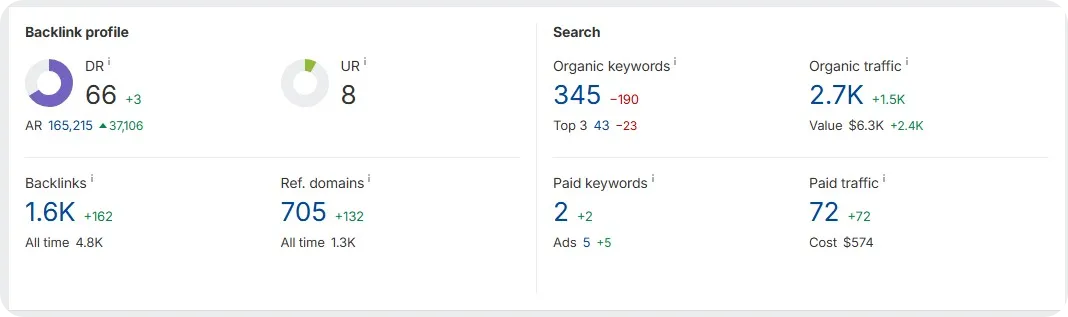
Et pour vérifier si vos efforts de référencement portent leurs fruits ou non, vous devez suivre des indicateurs clés, notamment :
- Votre note de domaine (DR)
- Trafic organique
- Mots-clés organiques
- Taux de clics (CTR)
Dans GEO, pour attirer l'attention de l'IA, les stratégies d'optimisation clés sont :
- Augmentation de la notoriété de la marque sur plusieurs plateformes
- Contenu frais, utile et informatif
- Structure de contenu claire avec un langage simple pour une extraction facile
- Listicles (“meilleurs X”, “top X”), guides, comparaisons (“vs”, “alternatives X”)
- Un fichier llms.txt, certains sites l'utilisent pour guider les outils d'IA vers leur contenu clé (son adoption est encore limitée, donc considérez-le comme expérimental).
Et pour suivre votre visibilité IA, consultez votre Citations IA. Encore une fois, les outils SEO peuvent aider.
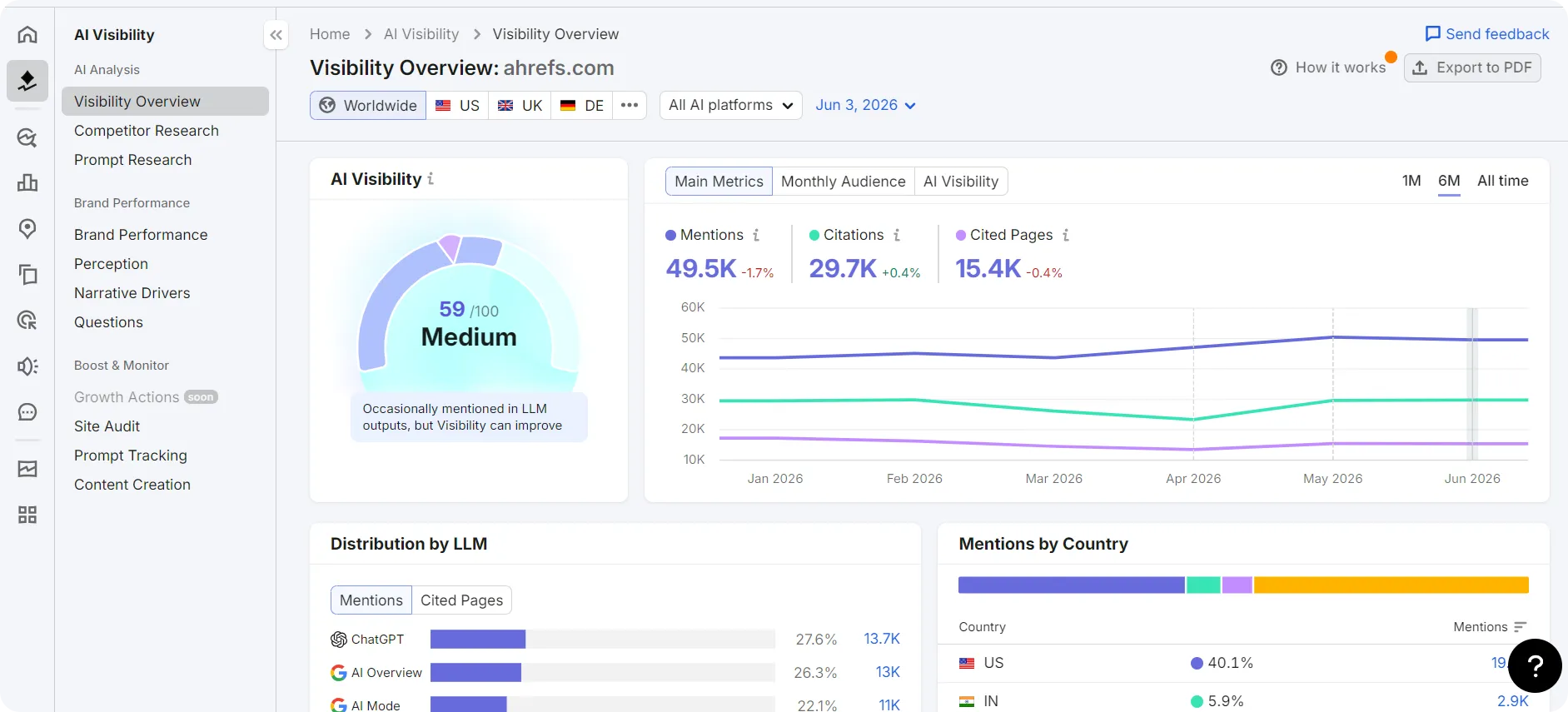
Astuce de pro : Il est préférable de suivre vos citations sur plusieurs plateformes d'IA (comme ChatGPT, Perplexity ou Claude), car différents modèles d'IA ont une logique différente derrière la sélection et la citation de leurs sources.
GEO vs SEO : Principales similitudes
Il y a aussi d'importantes similitudes que vous devez connaître.
- Autorité de la marque
Que ce soit en améliorant l'autorité du site web et les positions dans les SERP, ou en obtenant de nombreuses mentions de marque en ligne, vos chances sont plus élevées d'être mis en avant dans les moteurs de recherche traditionnels et d'IA.
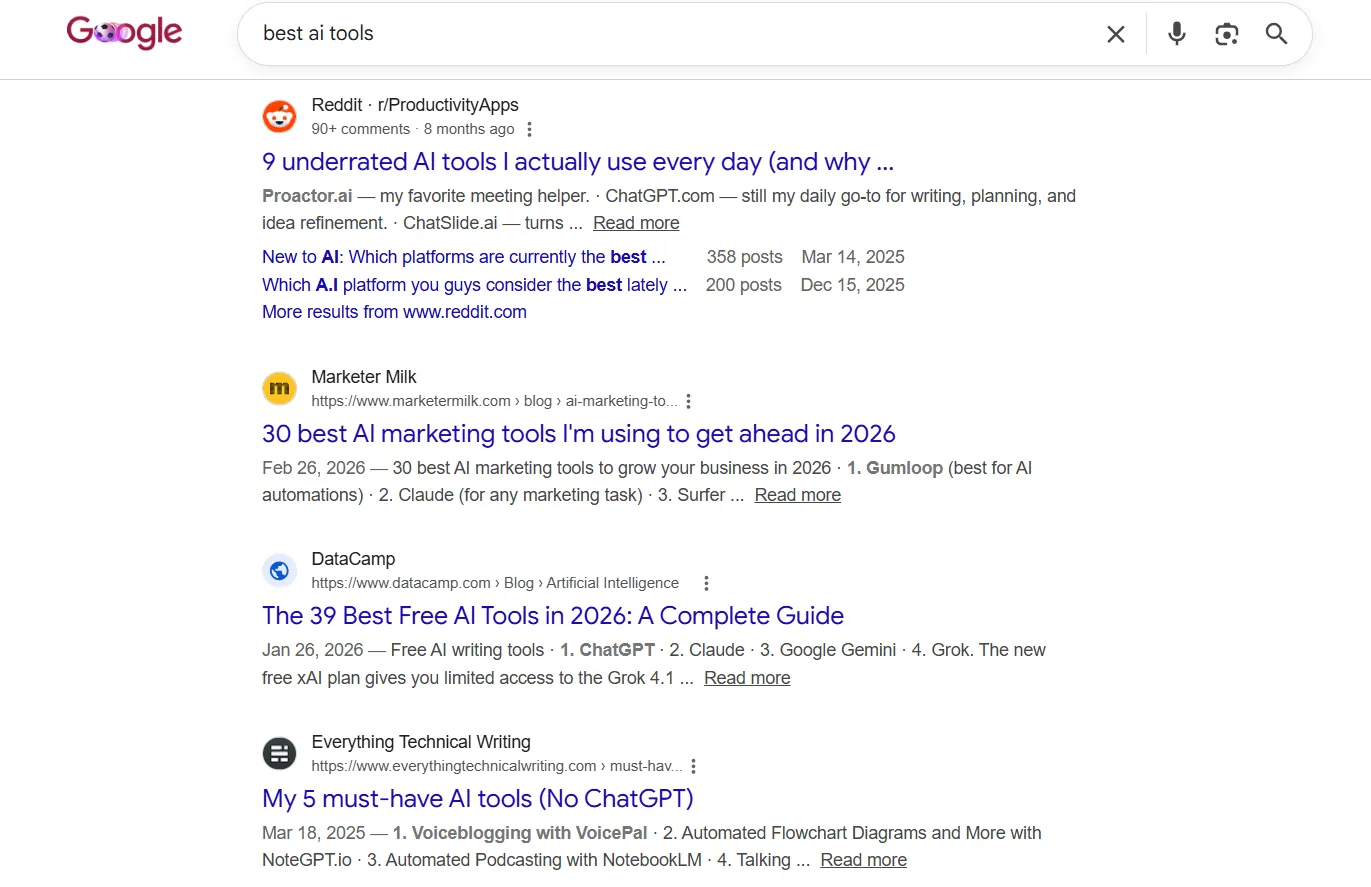
Voici un test simple que nous avons effectué sur la recherche Google et ChatGPT. Nous avons recherché “top 10 des outils de recherche de mots-clés” et avons remarqué que les communautés Reddit apparaissent sur les deux plateformes comme sources.
Pourquoi ? Parce que Reddit est déjà une plateforme faisant autorité où les gens peuvent former des communautés pour partager leurs expériences ou répondre aux questions des autres.
- Pertinence du contenu
En SEO et GEO, votre objectif final est de répondre aux questions des utilisateurs. Que votre contenu soit axé sur le classement des mots-clés ou sur l'invite tapée dans les outils d'IA, il doit correspondre à l'intention, être pertinent et utile.
GEO vs SEO : Lequel choisir ?
Il n'y a pas de réponse directe pour déterminer quelle stratégie est la meilleure en 2026 : le GEO ou le SEO. Étant donné qu'ils ciblent des objectifs différents, cela dépend des besoins actuels de votre marque.
Mais une chose est claire : vous devriez commencer par le SEO comme fondation pour renforcer la crédibilité de votre marque, et continuer avec des tactiques Géo pour augmenter également le potentiel de visibilité de l'IA.
Outre leurs propres données d'entraînement, les modèles d'IA peuvent également utiliser des pages Web déjà indexées par les moteurs de recherche pour générer des réponses. Dans la plupart des cas, les sources citées par l'IA sont également bien classées sur Google.

Cela signifie que plus vos positions sur Google sont élevées, plus votre contenu semblera faisant autorité pour l'IA en tant que source. Cela augmentera vos chances d'être cité par l'IA.
L'approche de SayNine
Chez SayNine, nous privilégions les stratégies SEO et GEO pour nous-mêmes et pour nos clients. Voici comment :
- Nos services complets de référencement aident les sites web à obtenir de meilleures performances, une visibilité accrue et des positions de recherche plus élevées.
- Les services d’IA SEO de SayNine permettent à nos clients que leurs marques soient ajoutées à des blogs déjà publiés ou figurer en première position des listes de référence dans le secteur.
- À titre d'exemple de mélange des stratégies SEO et GEO, nous avons dirigé nos efforts de création de liens pour cibler davantage nos listicles les plus performants, afin d'augmenter également leur visibilité IA.
- Nous rédigeons également des articles de blog qui sont à la fois optimisés pour le SERP et l'IA, ce qui signifie que le contenu est informatif, structuré et clair pour en extraire des informations. Ceci est particulièrement utile pour remporter de nombreuses citations par l'IA.
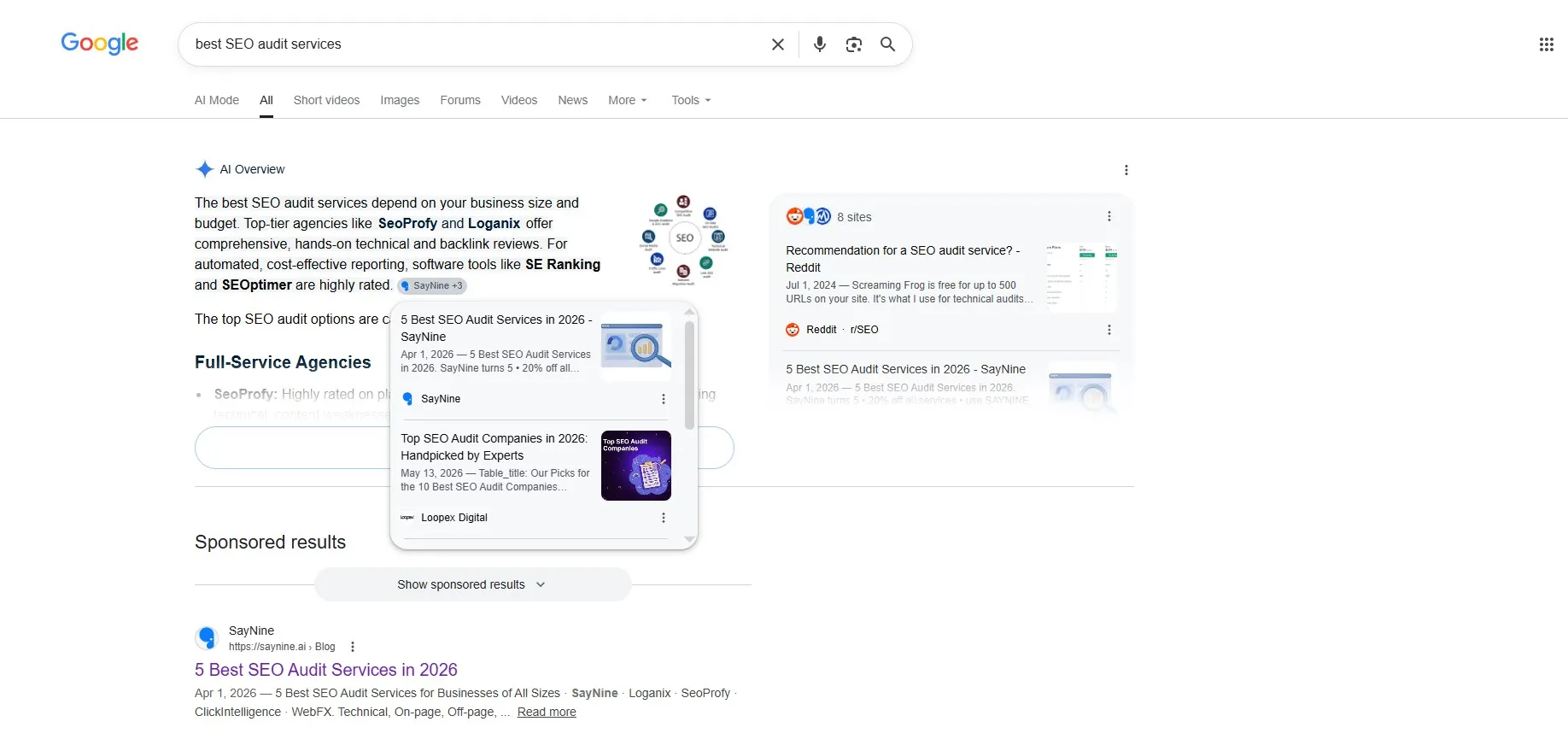
Voir comment Vue d'ensemble de l'IA a cité notre article sur meilleurs services d'audit SEO.
Dans l'exemple de notre client, une campagne ciblée de création de liens et de listicles a entraîné une nette augmentation de la visibilité IA. Résultats de GroWrk montrez qu'en seulement un mois, une campagne stratégique de guest posting et de listicles a permis de :
- Augmenter le nombre de citations de l'IA de 60% au total, avec des gains sur toutes les plateformes majeures
- Augmenter le classement de domaine de 57 à 60 en novembre.
- Augmenter le trafic organique de 5,6K à 7,2K (soit une augmentation de 29%).
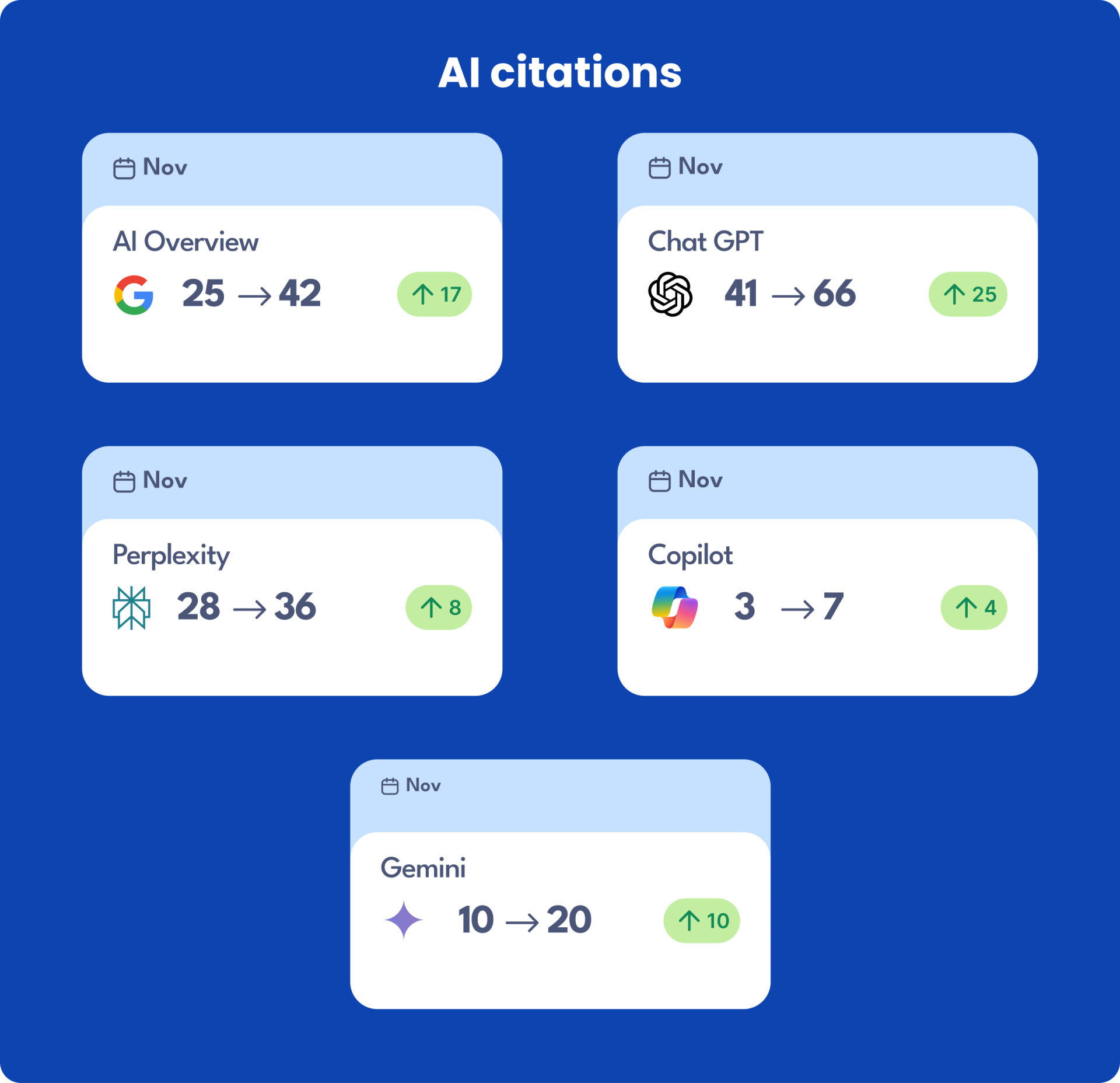
Ceci est un exemple clair de SEO et de GEO se renforçant mutuellement : en faisant figurer GroWrk dans des listes sectorielles et en créant des backlinks faisant autorité, nous avons renforcé sa présence dans les deux Google et la recherche IA en même temps.
Comme nous constatons des résultats notables tant pour nos clients que pour SayNine, nous recommandons de combiner les stratégies SEO et GEO afin d'accroître également l'autorité de votre site web et votre visibilité auprès de l'IA.
Voici un wrap
Peu importe les différences entre le GEO et le SEO, les deux stratégies fonctionnent ensemble. Ainsi, pour un succès égal dans les SERP et la recherche IA, il est recommandé d'investir dans les deux stratégies.
Car si vous vous concentrez uniquement sur le SEO, vous pourriez passer à côté de la visibilité IA. Sans efforts SEO solides, vous avez moins de chances d'attirer l'attention de l'IA.
Et si vous voulez profiter pleinement des stratégies SEO et GEO, SayNine peut vous aider ! Il suffit de nous contacter, et nous ferons tout pour vous.
FAQ sur le GEO vs le SEO
Qu'est-ce que GEO vs SEO ?
Le GEO et le SEO visent tous deux à améliorer la présence en ligne de votre marque. Alors que le SEO se concentre sur l'amélioration de votre classement dans les SERP, le GEO vous permet d'apparaître sur les outils d'IA. Selon la plateforme que vous souhaitez optimiser, chacun a ses tactiques et stratégies spécifiques à suivre.
Comment améliorer le GEO ?
Les stratégies clés en matière de GEO comprennent l'augmentation des mentions de votre marque sur divers canaux, plateformes et sources réputées ; la mention de votre marque dans des listes, des articles comparatifs ou des guides ; et la rédaction de contenu avec une structure claire et un langage simple.
GEO remplace-t-il le SEO ?
GEO ne remplace pas le SEO car il poursuit des objectifs d'optimisation différents. En fait, les deux vont de pair, un SEO solide soutenant souvent la performance GEO.