


Recent AI SEO statistics show that 80% of consumers now use AI summaries for at least 40% of their searches.
This means that people prefer fast and summarized results instead of opening search result sources one by one.
Your website might still do well on SERPs through building backlinks, but there is much more to be done to appear in AI summaries and generated answers.
And do backlinks play any role here?
Read along as we discuss the backlinks importance in AI search, and what other steps are needed to be cited by AI.
The Role of Backlinks in Traditional SEO
For years, backlinks have been and still are the cornerstone of any website’s off-page SEO strategy, especially for those just starting with their digital marketing efforts.
Businesses need to get more backlinks from other websites so that they can:
- Drive traffic to their website
- Boost online visibility so that search engines and more people can learn about them
- Grow their website’s credibility and ranking potential
Given this steady understanding of why backlinks are important, many still choose to invest in link building services and other backlink strategies. The more backlinks they get from authoritative and relevant websites, the more their rankings benefit.
This has always been the rule.
But with AI, a lot has changed in how people find answers to their questions and how businesses build their online presence.

How is AI Changing the Search?
Compared with traditional SERPs, AI search engines have their own way of answering users’ queries.
And how do they determine which sources “deserve” to get cited?
Simple as it is, AI search systems typically retrieve relevant sources, analyze their content, and summarize the information into a generated answer, citing multiple sources used in the process.
Although different AI platforms (like ChatGPT, Perplexity, or AI Overviews) evaluate and present their answers differently, they all aim to deliver relevant and trustworthy information to users.
Here is how the Google AI Overview Document, for example, describes the logic behind AI Overview’s answer generation:
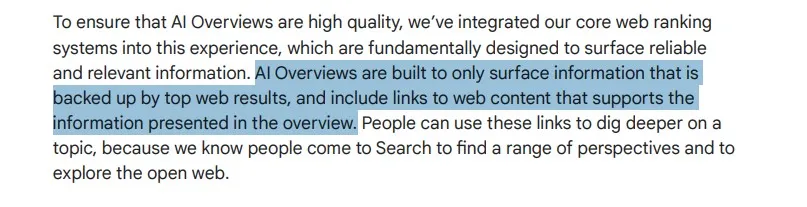
Notably, AI search engines usually pull information from sources that are already indexed by search engines, and many of those sources may also rank well on SERPs. Since backlinks play a major role in this, they might also be an indirect website credibility and trust signal to AI search engines.
So basically, we can’t fully deny the importance of backlinks in SEO, and consequently in AI SEO, too.
Here is how SayNine’s CMO, Mariam Mkhitaryan, has backed this idea:
“Both SEO and AI SEO are interconnected. You need to focus on both, because by building strong SEO foundations, you also build strong AI visibility foundations.”
But speaking of AI SEO, there is a lot more to consider and to do (strategy-wise) in order to succeed in AI search.
Are Backlinks Still Important? Here’s What Experts Say
Right after these new AI search realities, experts and SEO professionals started analyzing what patterns stand out in brands’ AI visibility.
So there is a lot of research and data explaining what matters to AI the most when answering users’ questions.
For example, Ahrefs’ Analysis of AI Overview Brand Visibility Factors resulted in the following key takeaways:
- AI Overview visibility correlates weakly with link metrics
- And the strongest correlation with the AI Overview mentions comes from:
- Branded web mentions (0.664)
- Branded anchors (0.527)
- Branded search volume (0.392)
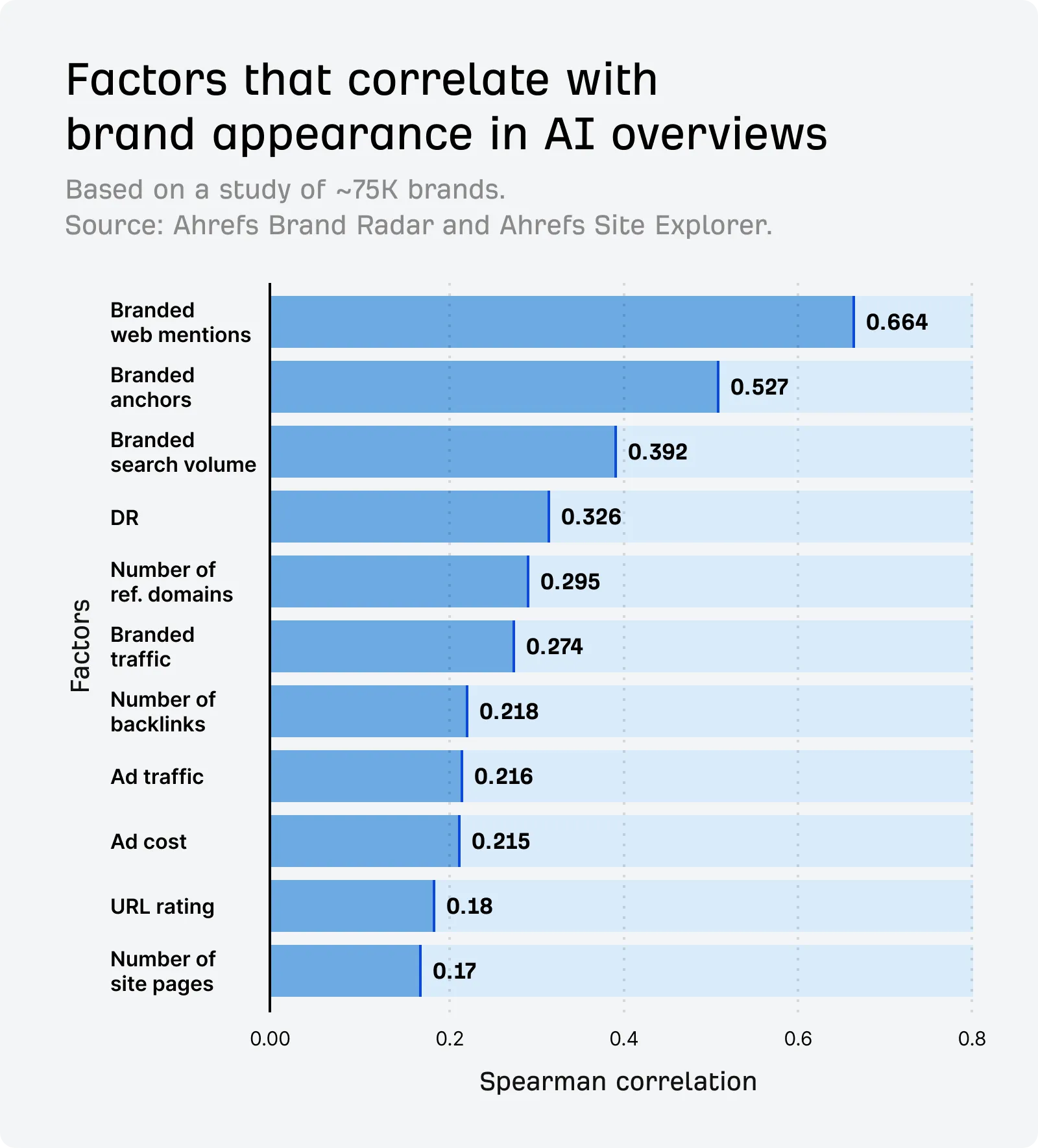
The takeaway is that backlinks get you into the index. Brand mentions move you from indexed to cited.
Here’s what Margarita Loktionova, the Product and Content Marketing lead at SEMrush, suggests, based on SEMrush’s study on 1000 domains across five leading AI platforms (ChatGPT, ChatGPT with Search, Gemini, Google’s AI Overviews, and Perplexity).

The most visible domains didn’t have the most links; they had the right ones. Quality, credibility, and source diversity win.
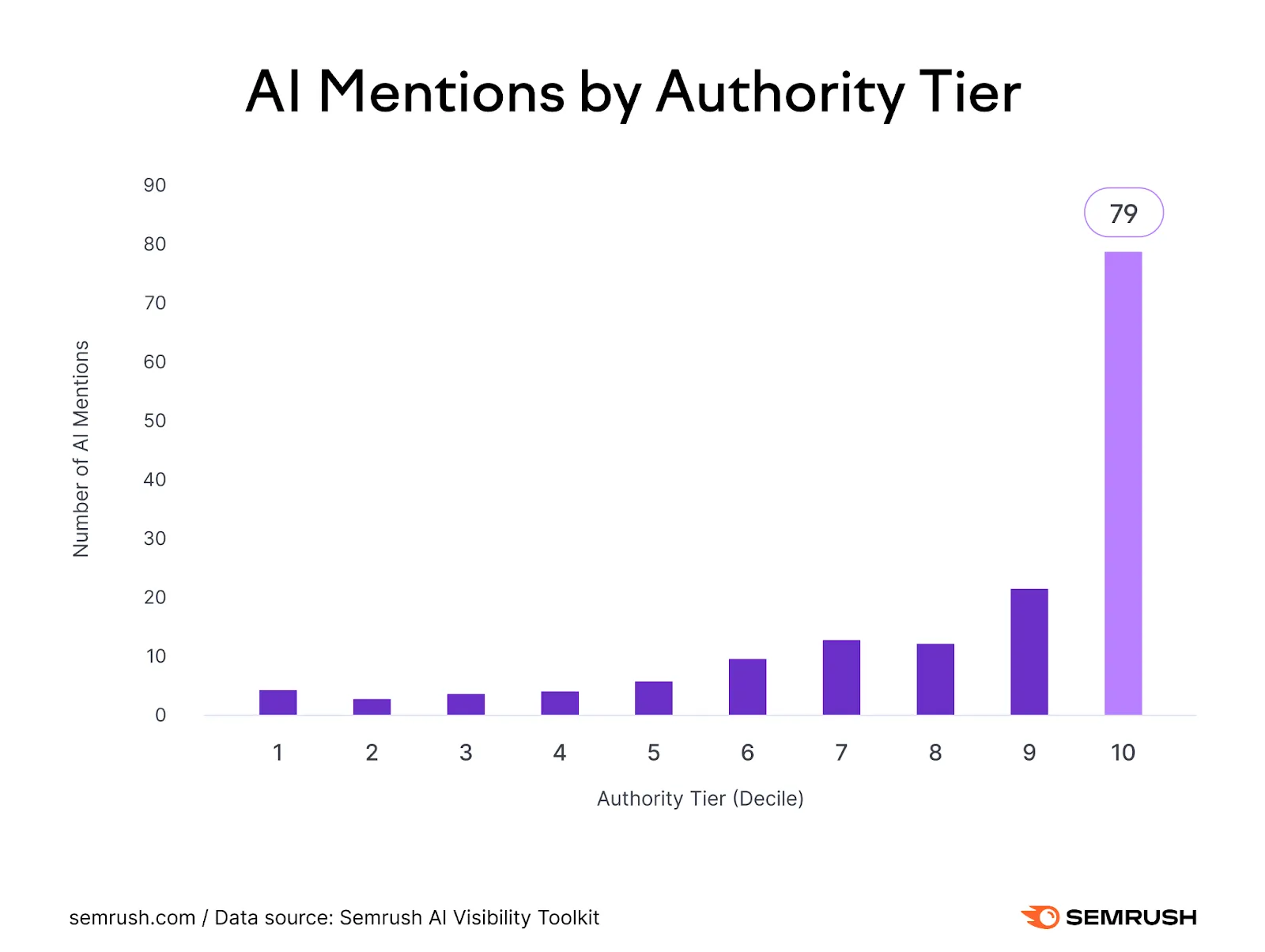
So, domains with strong backlink profiles show up more often in AI answers, especially after they pass certain authority thresholds.
This meant that the focus should now be more towards quality over quantity, along with the relevance and authority of the websites from which those backlinks come.
And as she later explains, backlinks are not the only trust signal for AI engines. Unlinked brand mentions matter, too.
And on our end, we also understand the backlink benefits and combine effective link building with AI SEO strategies when working with our clients. For example, the core strategies to improve GroWrk’s AI visibility and SEO growth included:
- Building high-authority backlinks
- Launching a guest posting campaign with branded anchor text backlinks included
- Writing and publishing listicles with GroWrk mentions
After months of steady work, the numbers didn’t make us wait too long. The client saw 29% in traffic increase and a 60% increase in AI citations, building trust among AI search engines and LLMs for further recommendations.
Now that the strategic change in AI SEO is visible to you, let’s see what the core strategies actually are.
Build More Brand Mentions
Brand authority matters a lot to AI models. And the best way to signal to AI that it can trust and recommend your brand is to make sure it is talked about a lot online.
One way to do this is by earning lots of brand mentions.
Brand mentions are any reference to your brand online. They can be linked (a backlink that uses your brand name as anchor text) or unlinked (your brand name in plain text, with no link).
Both matter. The more mentions you get across credible sources, the more signals AI engines have to notice and cite you.
And to prove this, we are more than happy to bring our own example.
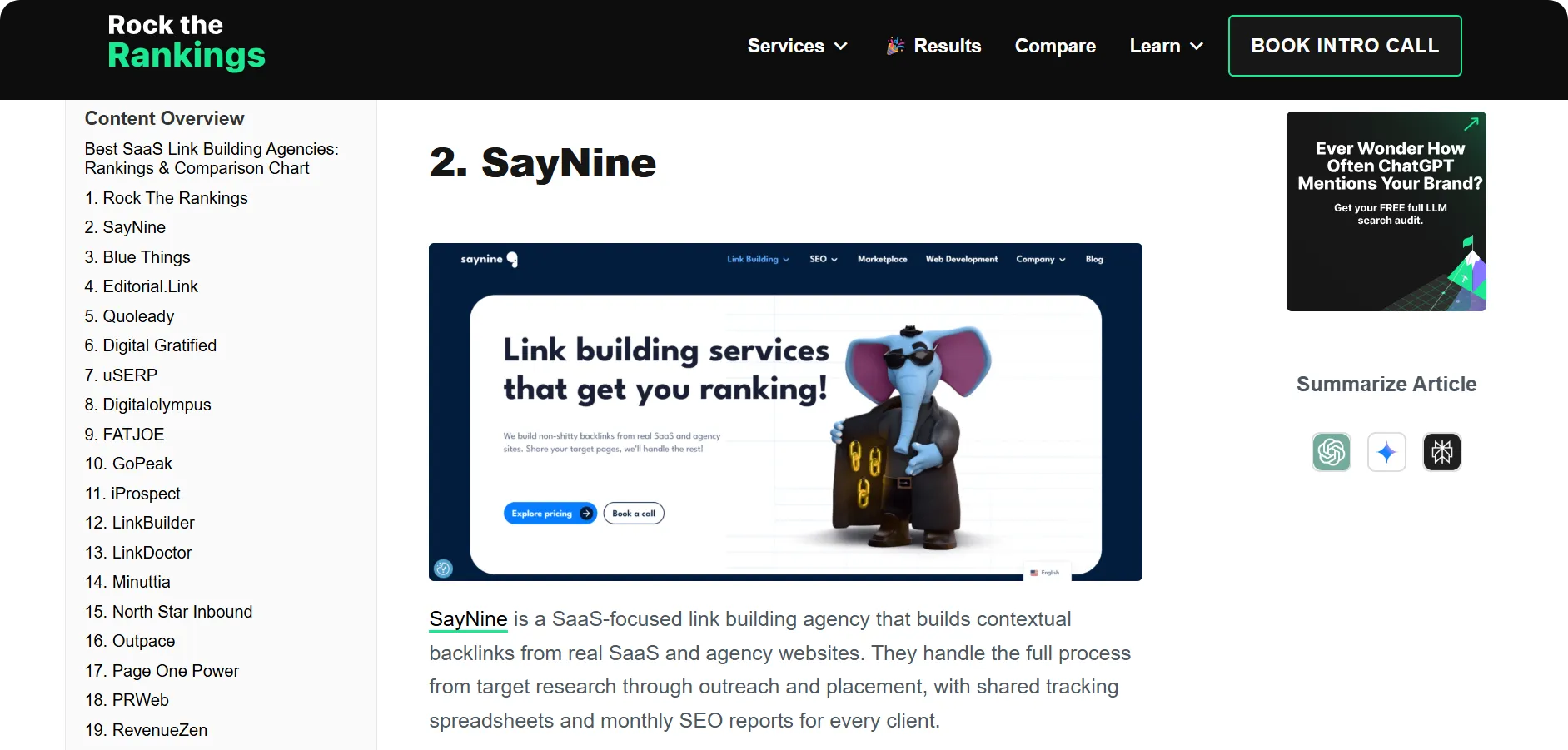
In short, branded mentions help you level up your brand’s credibility, authority, and trustworthiness in the eyes of AI models and LLMs. So, when people look for “best video editing tools”, for example, your brand can appear in AI’s options.
Publish/Get Included in Listicles
The next important step you should take is making sure your brand is mentioned in listicles, especially those discussing the “top” or “best” services/products in your industry.
It is important to balance between publishing such listicles yourself (with your brand mentioned, of course) and reaching out to relevant websites to get featured in their listicles, too.
How can you find them? Consider SEO tools like Ahrefs.
Follow these steps to find listicle opportunities:
- Log in to your Ahrefs account
- Navigate to its “Content Explorer” section
- Type inurl:https:// “top + your industry agencies/software/service” OR “best + your industry agencies/software/service”
- Filter the necessary metrics to get high-ranking websites (such as DR 50-90, website traffic from 1K)
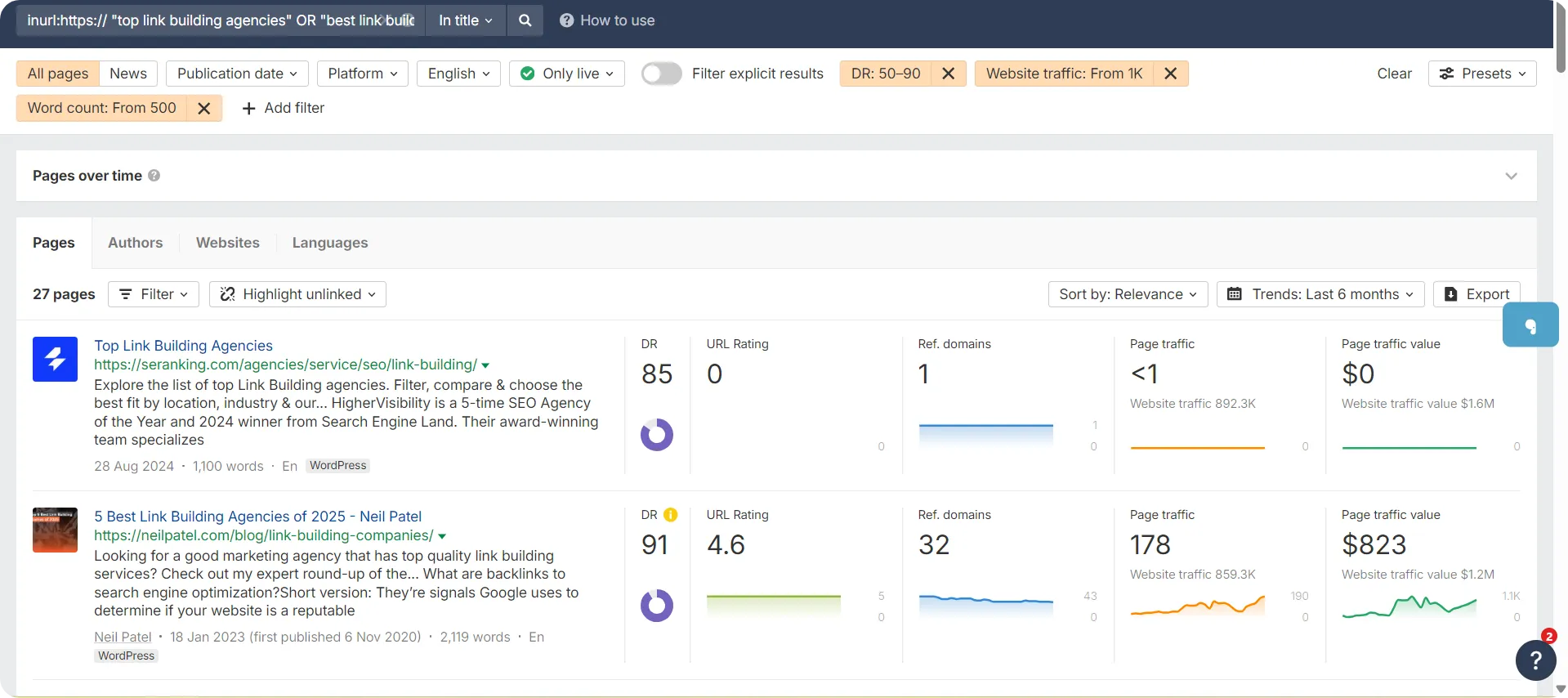
After selecting the website that fits your criteria, reach out and ask to get featured/linked to.
Note: This method will give you access to the existing listicles only, and the possibility of your brand being included in the top 3 options of the articles can be low. Besides, your outreach efforts may take too much time without a clear outcome.
So, we offer SayNine’s Link Building Marketplace as another good option for your listicle strategy.
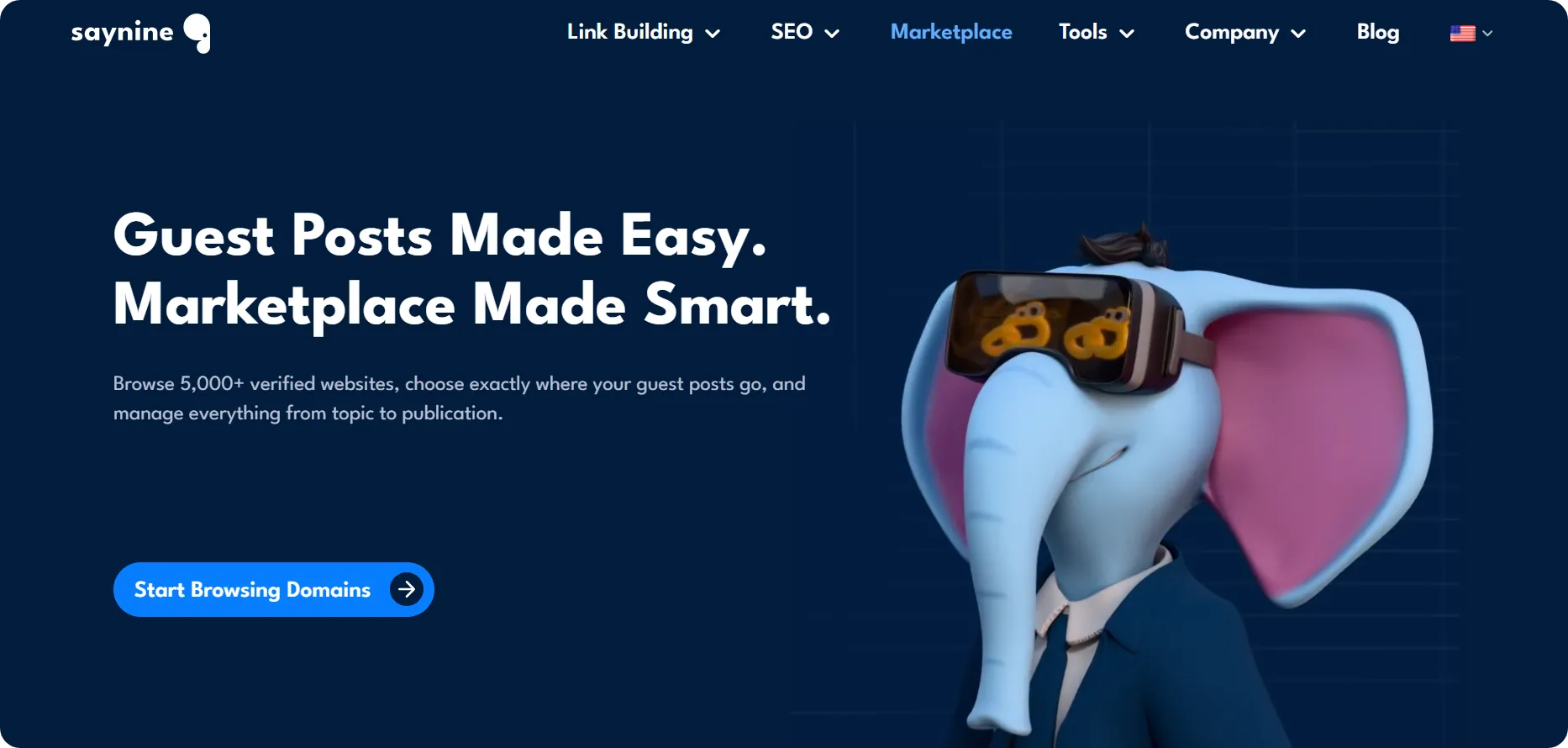
Through the Marketplace, you can access 5,000+ verified domains, filter the right ones that fit your needs, and be the first to publish listicles with your brand mentioned in top positions!
Structure Your Content Clearly
As said before, AI models mostly work by scanning existing content and retrieving information that matches users’ queries the most. This means that how your content is written and structured is crucial.
Have you ever noticed that when you search for something on AI search engines, the cited sources come from both highly popular websites (like Wikipedia) and lesser-known ones?
That’s exactly because the former are already recognized as trusted sources online. Meanwhile, smaller websites can still earn citations by publishing content that AI systems consider highly relevant, useful, and well-structured.
Here’s a simple ChatGPT search example for “What are the current SEO trends?”.
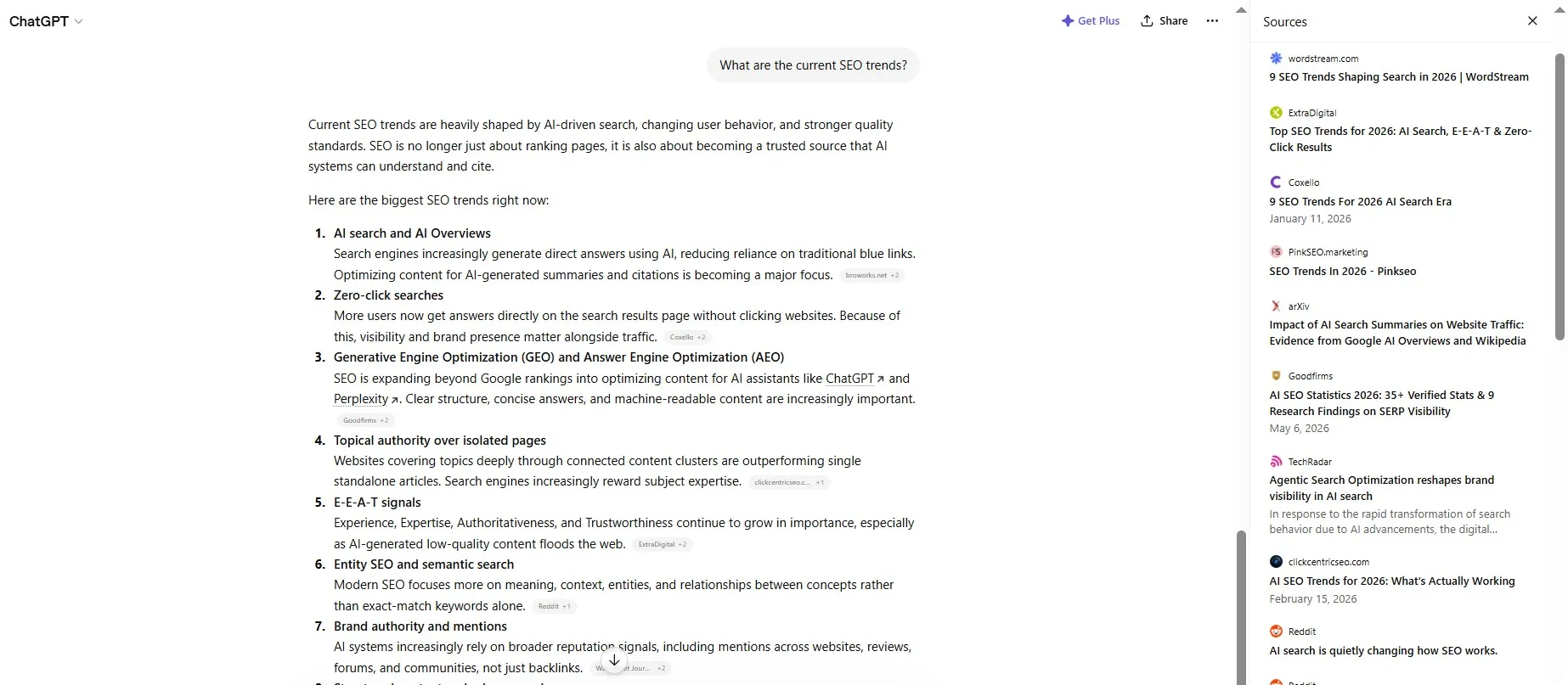
And if you open the sources, you can clearly notice that the content is structured in clear question-answer formatting, with clear headings and sections listing the trends.
So, next time you write your content, make sure to:
- Write it in a clear and simple language. Provide direct answers to your topic questions without long introductions
- Where applicable, break your paragraphs into smaller ones
- Use bullet points or numbering when you list something
- Include FAQ sections with relevant Q&As, keep them direct and precise
- Include images, charts, graphs, or tables for AI systems to interpret, extract, and present in generated answers
- Add an llms.txt file to your root domain. It tells AI crawlers which pages you want them to use, similar to robots.txt
- Use structured data for Articles, FAQs, Products, and Organizations. It helps AI scan your content faster
AI parses content differently from humans and approaches it purely from a technical perspective. And, thus, to “get picked” by AI engines, your content should fit their rules.
The Bottom Line
So, do backlinks still matter in AI search? The answer is yes.
Build them for the SEO foundation to get indexed, ranked, and visible to AI crawlers. Without that base, there is nothing for AI to find.
Then go further. Brand mentions, listicles, well-structured content, and the technical basics (llms.txt and schema) are what move you from “ranked on Google” to “cited by ChatGPT.” Two independent studies and our own client case study point to the same conclusion.
SEO and AI SEO are not separate strategies. They feed each other. SayNine builds both. If you want a partner that gets the foundation right and also covers the AI SEO part, book a free consultation.
FAQ on Backlinks Importance in AI Search
Why are backlinks important for SEO?
Backlinks are important for SEO as they act as digital “votes of confidence” that tell search engines your site is trusted, credible, and worth ranking.
How do nofollow links perform in AI search visibility according to Semrush’s research?
Nofollow links work nearly as well as follow links. Both showed similar correlation scores, with the biggest gains only at the top authority tiers.
How do you do SEO for AI searches?
SEO for AI searches, often called Generative Engine Optimization (GEO) or AEO, focuses on strategies like brand mentions or listicle placements to ensure your content is cited by Large Language Models (LLMs) like ChatGPT, Google, and Perplexity.