


With a limited budget, every backlink counts—so choosing the right pages to promote is a big deal.
You don’t want to waste time or money building links to the wrong pages, right?
In this guide, we’re sharing the exact process we use to choose target pages for link building, along with useful tips to help you make smarter decisions and get better results.
Let’s start!
How to Pick Target Pages for Link Building in 5 Steps
Not sure which pages to focus on for link building? No worries. Our SEO team has broken it down into five easy steps to help you choose the right ones.
Step 1: Set Clear Goals
First things first, get clear on what you want to achieve.
Do you want more traffic? A higher domain rating? Better rankings for a specific keyword?
No matter what your goal is, define it beforehand. It’ll make everything much easier whether you’re handling it in-house or working with a link building services provider. A clear target helps everyone stay focused and make smarter decisions that move the needle.
Step 2: Choose Which Page Types to Focus On
Now that you have defined your goals, it’s time to choose which pages to promote. Picking the wrong ones can lead to wasted time, money, and effort.
So, what types of pages should you actually build links to? Here’s what we’ve learned from working with our clients:
Product or Service Pages
These are the pages where you showcase your products or services. Naturally, it makes sense to promote them, and we do.
But here’s the thing: We often see companies only building links to their service pages, which is not good, as it starts looking unnatural to search engines like Google, which prefers organic backlinks that are not overly promotional.
So, our advice? Promote product/service pages, but don’t overdo it. Balance is key.
Blog Pages
Some people think that blog posts aren’t worth building links to, as these are more informational pages. But that’s a myth.
A well-written blog can not only educate people but also drive serious traffic and even convert visitors into clients. The key is choosing blog content that’s relevant to your offerings.
Let’s say you offer backlink services. Linking to a blog post about link building consulting can make perfect sense. People reading it are already curious and if your content helps them see the value of investing in backlinks, you’re halfway to landing a new client.
Homepage (Should You Build Backlinks Here?)
We don’t link to the homepage and here’s why.
First, it’s difficult to find websites that want to link to it. Second, homepage links can appear overly promotional, which Google does not love. And finally, you’ll naturally get some homepage backlinks over time (from brand mentions, for instance).
However, if your business gets featured in an article like “Top 10 [Industry] Companies,” then linking to your homepage makes total sense. It helps readers learn more about you in a natural and relevant context.
So, while linking to the homepage is not a priority for us and is not part of our link building strategy, you can still get them as long as they feel natural.
Step 3: Review Target Pages
The next step is to review all the pages you want to target.
When onboarding new clients, they always share their priority pages. But we don’t immediately jump into building backlinks. Instead, we always review all the URLs and target keywords to ensure there are no issues that could negatively affect the campaign’s performance.
Here’s what we pay attention to:
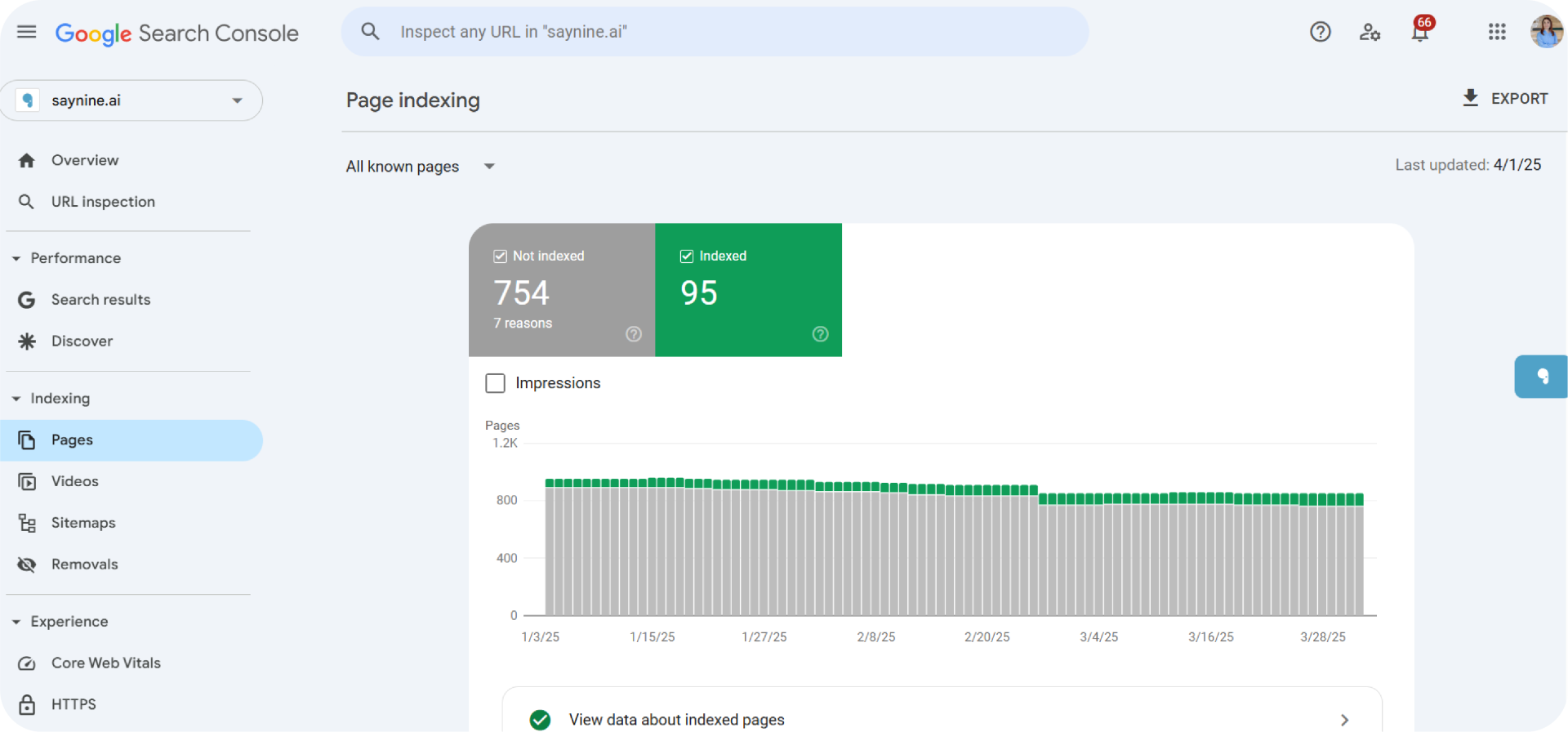
Is the page indexed? If a page isn’t indexed, it means your page is not shown in Google search results. In this case, backlinks won’t help at all. No matter how good the content is, if Google can’t see it, there’s no SEO value. So, make sure you have proper indexing in place, which you can easily check with Google Search Console.
Is the page showing up in Ahrefs?: We use Ahrefs for backlink monitoring. If a page doesn’t appear in the tool, we can’t track key metrics and keyword movement, making it difficult to measure results.
Is the page optimized for SEO?: It’s highly important for us that the client’s pages have some basic elements optimized for SEO, like the headings, meta tags, and internal links. SEO and link building work best when they are both in good shape.
Is the page actually relevant to the offer? This is important especially when it comes to blog pages. We always check that the content is relevant to the client’s products or services. Otherwise, it’s just a waste of time and resources.
This way, we ensure that all the selected target pages for link building are worth promoting, allowing us to run a more targeted campaign.
Step 4: Choose the Best Keyword for Each Page
Once you have chosen the best pages for your backlink campaign, it’s time to find the right keywords.
All you need is to use SEO tools like Ahrefs for keyword research. Simply type your seed keyword into the “Keyword Explorer” and review the metrics.
As you can see in the example below, “link building services” is quite a competitive keyword with 64 Keyword Difficulty, meaning that you will need strong backlinks to outrank your competitors.
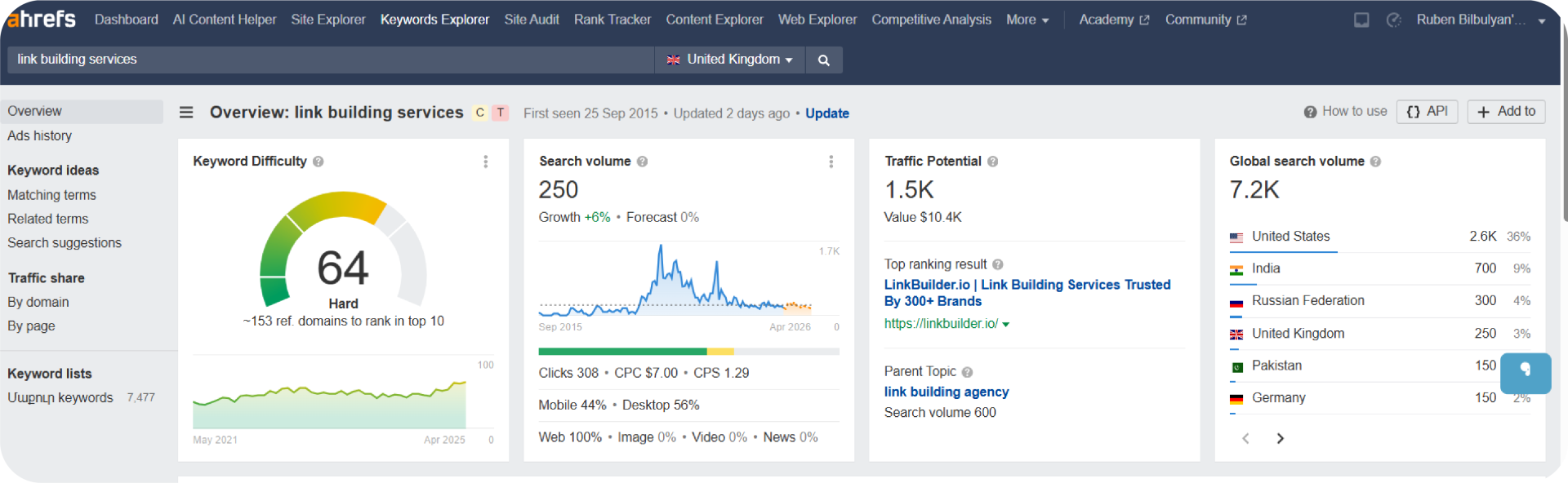
Ideally, you want to find keywords with low difficulty and high global search volume to easily rank high on Google. But, if you don’t manage to find such keywords, don’t stop there.
Check out the “Matching terms” or “Related terms” to discover more keyword types with good metrics. Sometimes, good keywords are just a few clicks away.
Apart from Ahrefs, you can also use Google Search Console.
If you click “Search Results” and then “Queries,” you will see all the search terms or keywords the users have used to find your website.
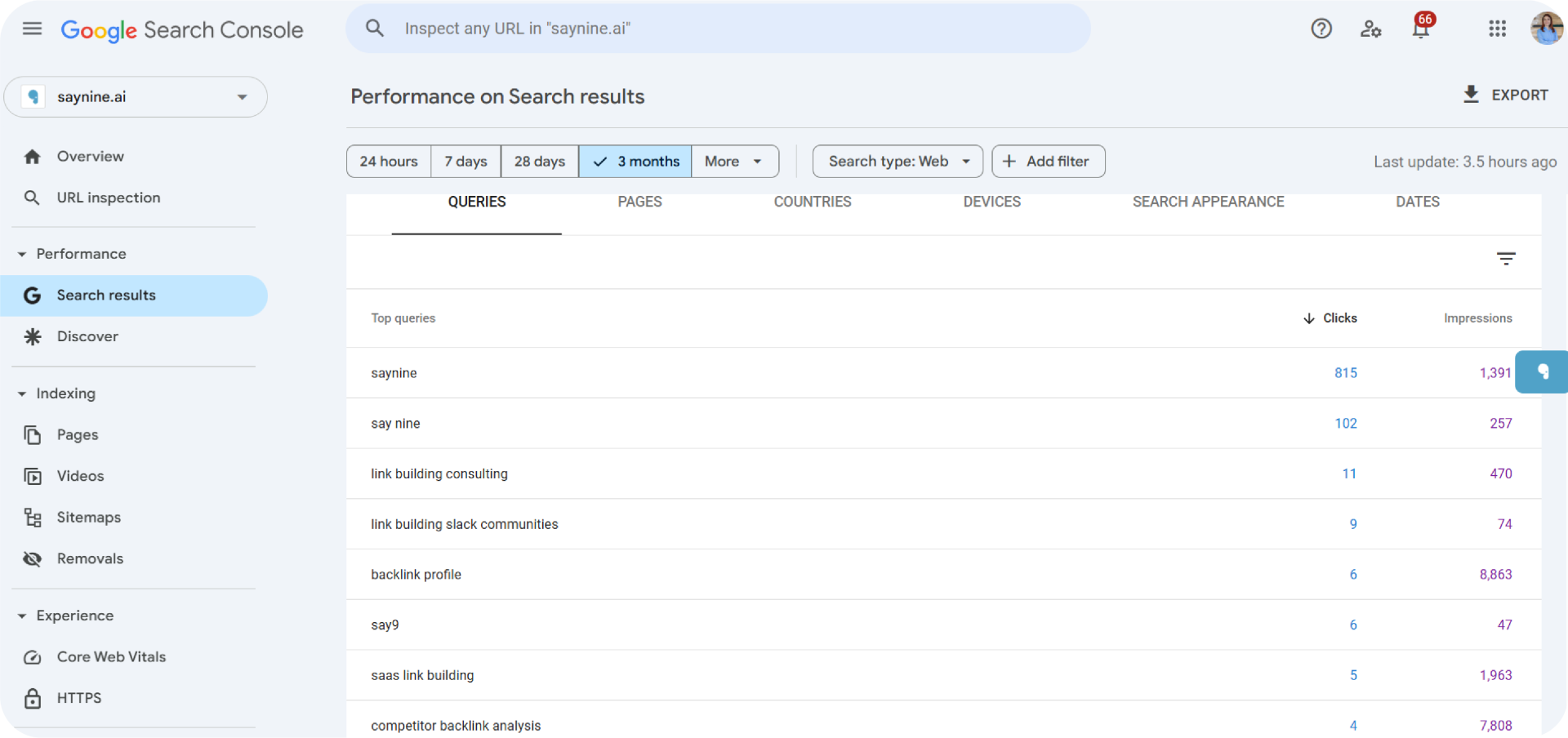
You may find some good queries there but always double-check their metrics using SEO tools to ensure they are also easy to rank for.
Note: Each page should have one primary keyword. You cannot target the same keyword for different pages, as it might lead to keyword cannibalization.
Once you’ve got your pages and keywords set, you’re ready for the fun part: building those backlinks.
Step 5: Build Backlinks & Track the Progress
After we approve all the targets with clients, we jump into link building.
At this point, we start reaching out to websites that meet our minimum metrics requirements: DR 50+ and 1,000+ monthly traffic. These aren’t just any random sites but reputable and trusted domains that can make a positive impact on your rankings.
Our content team then gets to work, making relevant text edits that naturally integrate the client’s anchor text into the existing blog content because that’s what search engines and users prefer.
Once the backlink is live, we record it in a partner worksheet and a client sheet for effective backlink management, ensuring open and transparent communication for all parties involved.
We also send clients a link building report at the end of each month, so they can see what’s been done and achieved during one month.
Note: It usually takes at least three months to start seeing some good results.
If things are not moving as expected, we have a call with a client to what’s working well and what needs to be improved. Maybe anchor text optimization is needed or perhaps the page needs more backlinks than was initially agreed. Whatever it is, we’re on it.
Bonus Tips for Choosing the Best Pages for Link Building
Before we wrap up, here are a few additional tips to help you achieve even better results from your link building campaign:
- Don’t overdo exact match anchor texts: Keep things natural by using a mix of short and long tail keywords.
- Go for fresh content: Target newly published blogs or at least those that have been recently updated for better and faster results. Google loves fresh content.
- Choose keywords with good metrics: If you cannot find keywords with low competition and high search volume, pick one that best fits your needs and support it with relevant backlinks.
These simple tips can help you maximize the impact of your link building efforts.
Closing Thoughts
Choosing the right target pages for link building might seem tricky, but it is an essential step.
By focusing on the pages that truly matter, be it product or blog pages, you can make sure your link building efforts are on the right track.
Keep these steps and tips in mind, and you’ll be well on your way to seeing real and lasting results in any link building campaigns!
FAQ about target pages for link building
What are page backlinks?
Page backlinks are links from other websites pointing to your site.
What pages should you build backlinks to?
You should build backlinks for both landing and blog pages for better results.
Are 1000 backlinks good?
We recommend building as many backlinks as you can consistently manage in the long run without sacrificing relevance or quality.


Quiz Time
Let's put your knowledge to the test.
Leave your email below to get a SayNine certificate!
Are you sure?