



Поиск сильно изменился. Все больше и больше людей теперь обращаются за ответами к системам ИИ вместо того, чтобы вводить запросы в поисковые системы.
Итак, что это значит для вашего бизнеса? Вы хотите, чтобы ваш сайт появлялся в ответах, сгенерированных искусственным интеллектом.
Как туда попасть? Получая цитирования и рекомендации от инструментов ИИ.
Оба инструмента повышают вашу видимость, но выполняют разные задачи. Вам нужно понять разницу между упоминаниями бренда в ИИ и ИИ-цитированиями, чтобы знать, как работает каждое из них и как их получить.
Но для начала — краткий обзор.
| Функция | Упоминания бренда ИИ | Цитирование ИИ |
|---|---|---|
| Определение | Ваш бренд в ответе ИИ | Ваша страница указана в качестве источника |
| Видимость | Повышение узнаваемости бренда | Повышение авторитета и доверия к бренду |
| Как оптимизировать под это | Широкое присутствие в Интернете | Полезный, достоверный, цитируемый контент |
| Пример | AI назвала SayNine в числе ведущих AEO-агентств | ИИ цитирует сообщение в блоге SayNine и дает на него ссылку. |
Что такое упоминания бренда в ИИ?
Упоминания бренда в ИИ происходят тогда, когда ИИ-модели называют ваш бренд в ответе без ссылки.
Давайте рассмотрим пример: если кто-то ищет “лучшие агентства для размещения ссылок в SaaS”, ChatGPT упоминает SayNine наряду с другими агентствами.
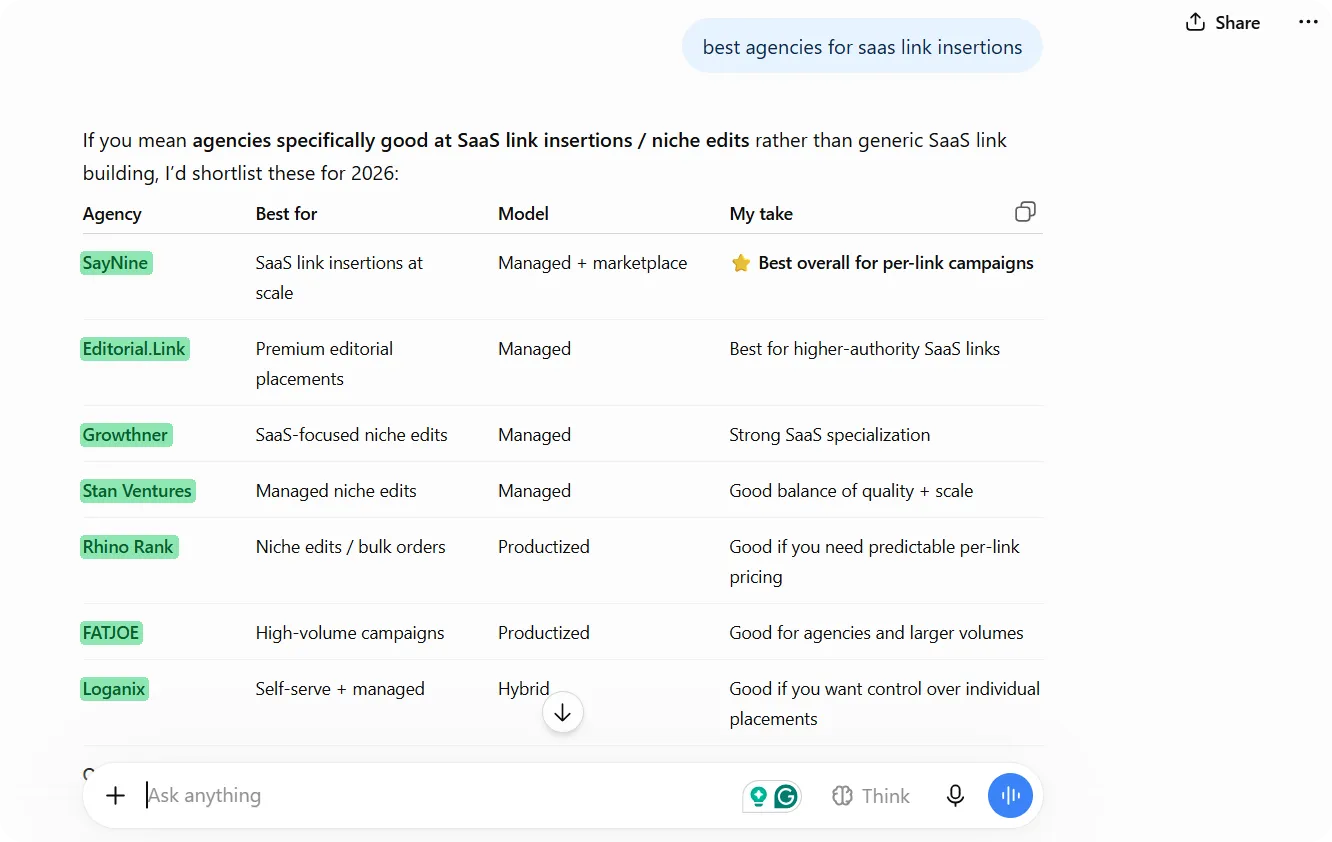
Какая от этого польза бренду SayNine или любому другому? Таким образом ИИ-инструменты связывают ваш бренд с темой, что повышает узнаваемость бренда и в целом Видимость в ИИ.
Самое приятное, что это может привлечь больше клиентов. Если кто-то захочет отдать аутсорсинг линкбилдинга, и искусственный интеллект назовет вас, получить рекомендацию от ChatGPT или другие системы ИИ включают вас в свой короткий список.
Судя по нашему опыту, около 4% наших клиентов в настоящее время приходят через LLM. Это небольшое число, но потенциал здесь действительно есть.
Что такое ИИ-цитирование?
Цитирование ИИ это когда модель ИИ указывает ваш контент в качестве источника для своего ответа. Обычно это включает в себя ссылку на ваш сайт или статью.
Вот два примера:
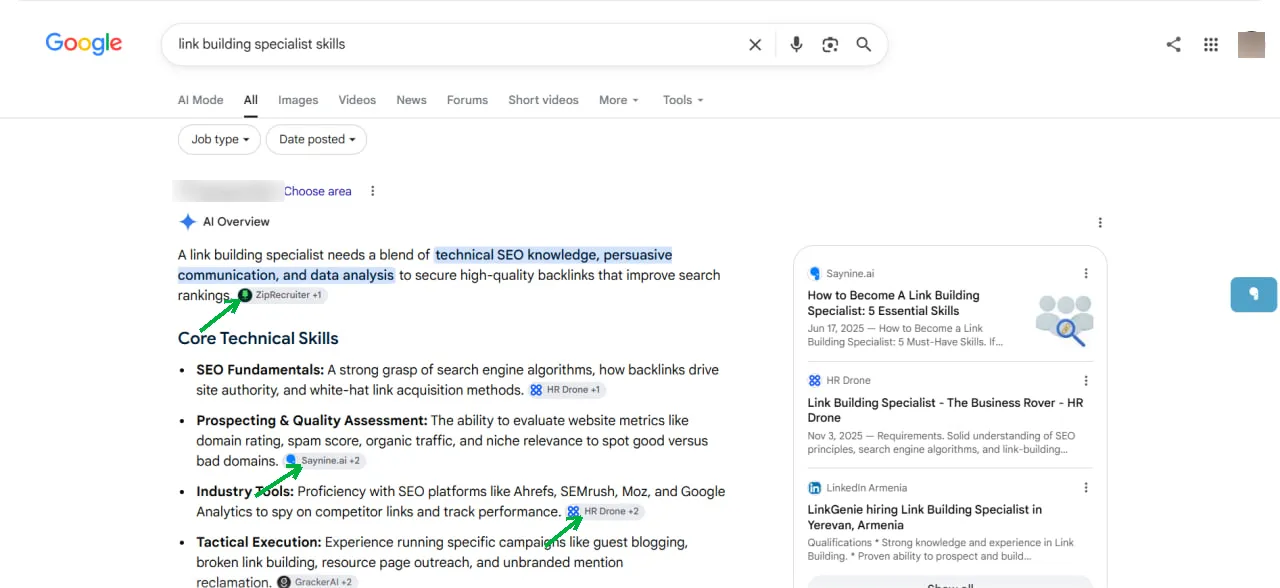
Мы искали навыки специалиста по линкбилдингу. Функция AI Overview от Google использовала статью SayNine по этой теме.
Кроме того, мы спросили у ChatGPT, какие агентства линкбилдинга для SaaS являются лучшими. Для составления своего списка он использовал SayNine в качестве источника.
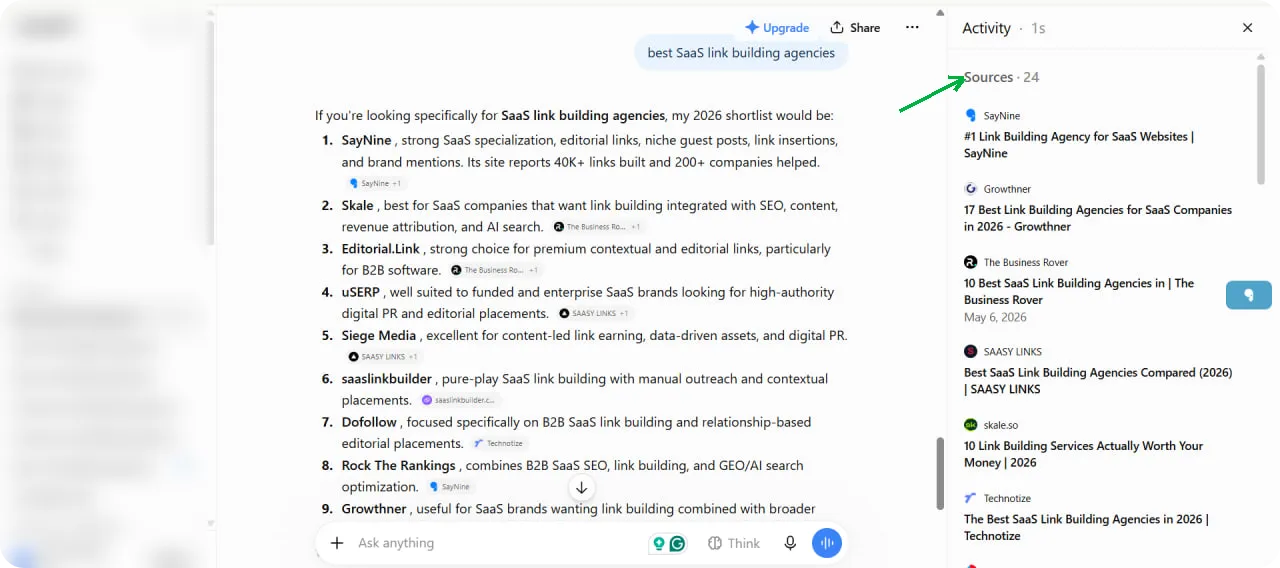
Теперь почему это имеет значение? Во-первых, цитирование означает, что ИИ “доверяет” вашему контенту и считает его достаточно надежным для использования в качестве источника.
Во-вторых, он направляет трафик. Читатели могут перейти по ссылке и зайти на ваш сайт.
Упоминания бренда в ИИ против цитирований в ИИ
Да, как упоминания ИИ, так и цитирования усиливают ваше присутствие в ИИ. Но между ними есть несколько ключевых различий:
➤ Что они из себя представляют
- УпоминаниеВаш бренд упоминается в ответе ИИ без ссылки. ИИ говорит о вас.
- ЦитатаВаша страница указана в качестве источника. ИИ ссылается на вас.
➤ Почему они важны
- > упоминание повышает узнаваемость. Люди видят ваше имя.
- > цитата формирует авторитет. ИИ воспринимает ваш сайт как заслуживающий доверия источник.
Вас могут цитировать, но никогда не упоминать, или упоминать, но никогда не цитировать. А Исследование SEMrush было установлено, что лишь от 6 до 27% наиболее часто упоминаемых брендов также входят в число основных источников, на которые ссылаются модели ИИ. Фактически, ChatGPT упоминает бренды в 3,2 раза чаще, чем ссылается на них. В среднем на один запрос приходится 2,4 упоминания бренда, но только 0,74 ссылки (BrightEdge AI Catalyst, 2025).
➤ Как их найти
- УпоминаниеИщите название своего бренда в тексте ответа. Здесь нет ссылок, на которые можно нажать.
- ЦитатаИщите связанный источник в ответе. Проверьте, указывает ли URL на ваш сайт.
➤ Как получить каждый
Не существует фиксированных правил для продвижения упоминаний и цитирования брендов в ИИ. Но есть стратегии, которые могут помочь.
Некоторые из них повышают вашу общую видимость в ИИ. Другие работают только для упоминаний или только для цитирований. Это подводит нас к следующему разделу.
Почему упоминания и цитирования берутся из двух разных источников
Упоминания и цитирования формируются разными процессами внутри ИИ, поэтому получение одного не обязательно означает, что вы получите и другое.
Упоминания поступают из обучающих данных: Модель искусственного интеллекта учится, считывая большой объем информации в Интернете во время обучения. Таким образом, чем чаще ваш бренд появляется в Интернете рядом с определенной темой, тем сильнее модель связывает ваш бренд с этой темой. Именно поэтому, когда кто-то позже задает вопрос по определенной теме, модель извлекает название вашего бренда из предыдущей памяти.
Главный вывод: упоминания создаются за пределами вашего сайта. Отзывы, подборки, списки, новости. Все это помогает модели понять, кто вы.
Цитаты получены из живого поискаКогда у ИИ-инструмента есть доступ к интернету, он получает информацию с живых страниц и пишет свой ответ на основе их содержимого. Затем он ссылается на использованные страницы. Эта ссылка и есть цитирование.
Этот процесс называется извлечение. ИИ находит вашу страницу в реальном времени и цитирует её. Он не вспоминает ваш бренд по памяти.
Почему это важно для вашей стратегии? Просто потому, что для них требуются другие тактики, которые мы обсудим в следующем разделе. Но перед этим давайте рассмотрим сигналы, которые используют системы ИИ, чтобы решать, что упоминать и цитировать.
Как разные платформы ИИ обрабатывают упоминания и цитирования
Не все инструменты искусственного интеллекта обрабатывают упоминания и цитаты одинаково.
Например, Google AI Overviews ссылаются примерно в 2,4 раза чаще, чем упоминают, в то время как ChatGPT поступает с точностью до наоборот.BrightEdge, AI Catalyst, 2025).
Вот как сравниваются основные платформы.
- ChatGPT (с веб-поиском)Показывает ссылки на источники и цитирует свои ответы, позволяя вам получить реальную цитату.
- ChatGPT (без веб-поиска)Оно выдает ответы на основе собственной памяти. Никаких ссылок или цитирования. Ваш бренд может появиться, если модель уже знает о нем из обучающих данных. Так что в этом случае можно получить упоминания.
- ЗамешательствоПлатформа известна высокой плотностью цитирования. Ответы сопровождаются пронумерованными источниками. Так что, если вы стремитесь получить много цитат, вам стоит обратить внимание на эту платформу.
- Обзоры Google AIПоказывать исходные карточки рядом с ответом. Функция извлекает информацию со страниц, которые уже ранжируются, поэтому прочный фундамент SEO здесь имеет ключевое значение.
- БлизнецыИсточники указаны прямо в тексте. Логика цитирования опирается на собственный индекс Google и Граф знаний.
Главный вывод: упоминание бренда в ChatGPT и цитирование в Perplexity — это два разных достижения. Поэтому отслеживайте платформы и знайте, какая из них что вам дает.
Как ИИ выбирает, что упомянуть и процитировать
Вы, возможно, задаетесь вопросом, как ИИ решает, о чём упоминать или на что ссылаться.
Во-первых, эти инструменты не раскрывают точный принцип своей работы. Но мы можем полагаться на некоторые закономерности.
Процесс начинается с вашего запроса. Искусственный интеллект читает его, определяет ключевые термины, а затем ищет ответы в своей памяти или в реальном времени в Интернете.
Вот несколько вещей, которые помогают вашему сайту получить упоминания или цитирования.
- Доверенные страницы побеждают. ИИ отдает предпочтение страницам, которые уже занимают высокие позиции и обладают реальным авторитетом. Руководство Google по функциям ИИ говорит:

Лучшие практики SEO остаются актуальными для функций ИИ в Поиске Google (таких как AI Overviews и AI Mode). Не существует никаких дополнительных требований для появления в AI Overviews или AI Mode, равно как и необходимости в какой-либо специальной оптимизации.
- Четкие ответы побеждают. Изложите факты ясно и ответьте как можно раньше, чтобы ИИ мог взять их прямо с вашей страницы.
- Структура помогает. Списки, статистика и заголовки делают ваши утверждения легко выделяемыми.
- Только в режиме поиска указываются реальные ссылки. Когда ИИ отвечает исключительно по памяти, он может придумывать фальшивые источники. Поэтому всегда проверяйте ссылку, прежде чем ей доверять.
Итак, пишите чёткий, точный и подкреплённый достоверными источниками контент и заводите себе настоящий авторитет. Вот что Оптимизация искусственного интеллекта Google в руководстве говорится об этом:
Создание контента, который люди считают уникальным, привлекательным и полезным, скорее всего, в долгосрочной перспективе повлияет на присутствие вашего сайта в поиске на базе генеративного ИИ больше, чем любые другие рекомендации из этого руководства..
Итак, сосредоточьтесь на создании ценного, полезного контента, который отражает вашу уникальную точку зрения.
Как оптимизировать упоминания бренда и цитирования в ИИ
Важны как упоминания бренда в контексте ИИ, так и ссылки на ИИ. Вот как оптимизировать обе эти составляющие.
Начните с исследования подсказок. Это помогает достичь обеих целей. Откройте набор инструментов ИИ-видимости от SEMrush и введите свою тему (мы искали “SaaS link building”).
В нем показано, какие запросы люди задают ИИ-инструментам, какие бренды упоминаются и какие источники цитируются.
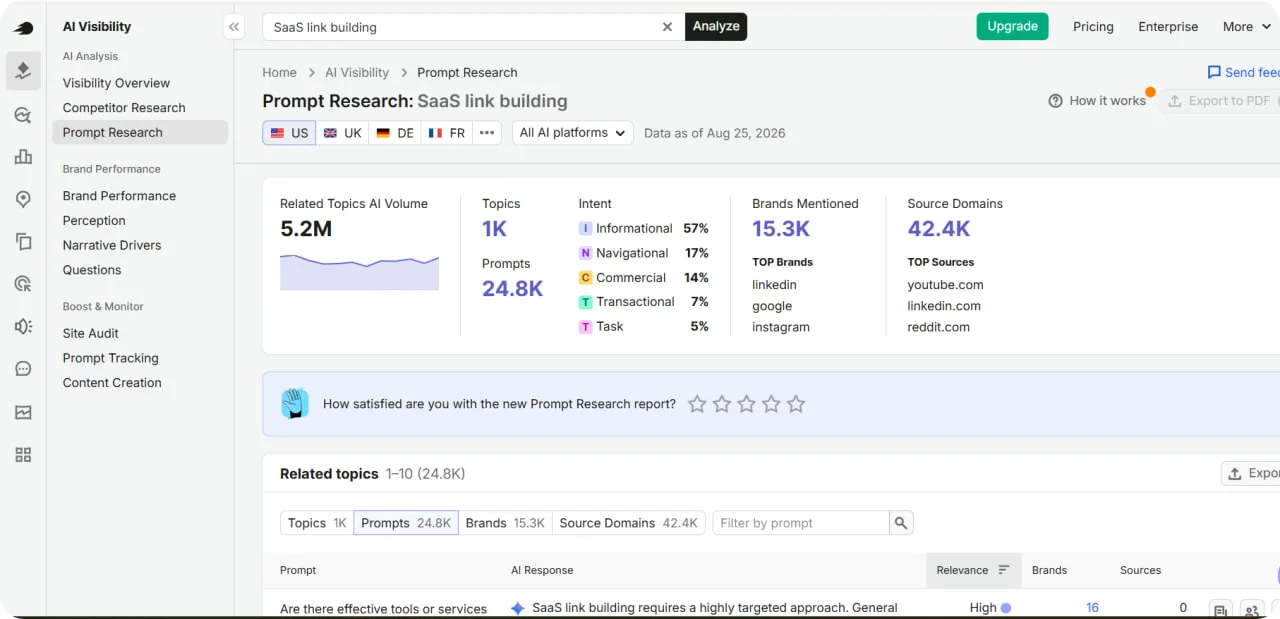
Список брендов показывает пробелы в упоминаниях. Цитируемые домены показывают цели для цитирования. Теперь вы можете разделить свою работу на два направления, о которых мы поговорим далее.
Чтобы увеличить количество упоминаний бренда, попробуйте следующие тактики:
- Попадайте в списки лучших. Стремитесь попасть в подборки “лучших” и сравнительные статьи, которые используют ИИ-инструменты при рекомендациях брендов.
- Появляйтесь там, где общаются сообщества. Сосредоточьтесь на форумах, сайтах с отзывами и платформах, которые уже обеспечивают видимость вашего ИИ, и стимулируйте появление там отзывов клиентов.
Модели искусственного интеллекта в большей степени опираются на эти сторонние сайты, чем на ваши собственные. То же исследование SEMrush, о котором мы говорили ранее, показало, что платформы с отзывами, такие как G2, занимают четвертое место среди наиболее часто цитируемых источников в сфере цифровых технологий (20,04% для ChatGPT).
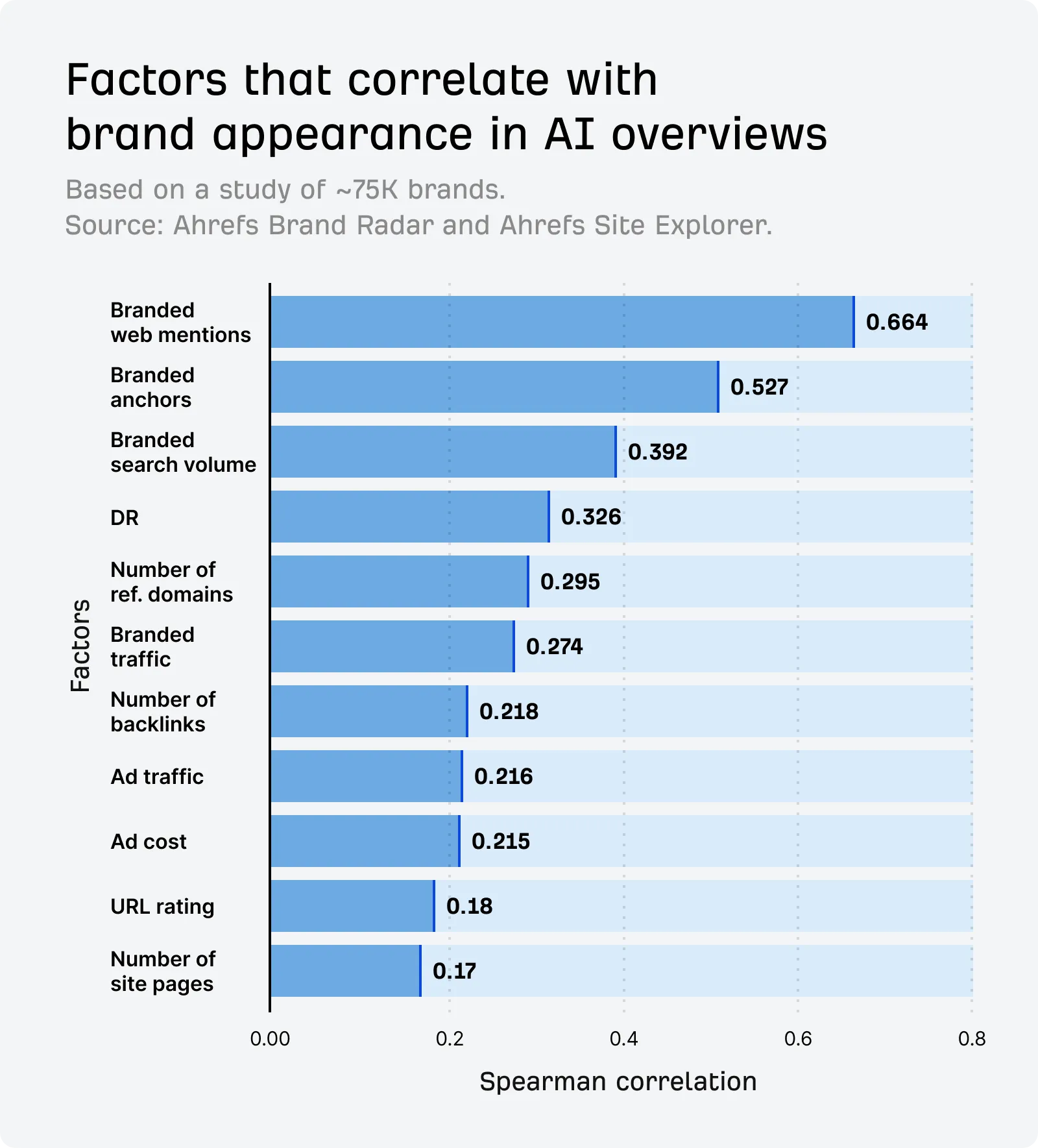
- Инвестируйте в цифровой PR и социальные сети. Размещайте информацию о своем бренде на авторитетных отраслевых сайтах и оставайтесь активными на платформах социальных сетей. каждое упоминание делает ваш бренд заметным для инструментов ИИ. Данные также подтверждают это. Ahrefs изучила 75 000 брендов и обнаружили, что упоминания в Интернете предсказывают видимость в ИИ примерно в 3 раза лучше, чем обратные ссылки (корреляция 0.664 против 0.218).
Теперь, если вы хотите увеличить количество цитирований вашего ИИ, работайте над этим:
- Здесь тоже сосредоточьтесь на списочных статьях. Создавайте ранжированные посты с надежными источниками, на которые ссылаются ИИ-инструменты. Старайтесь сделать ваш контент как можно более персонализированным. Добавляйте собственные инсайты, самостоятельно тестируйте инструменты и решения и делитесь своими находками. Ознакомьтесь с нашим Пример использования GroWrk чтобы узнать, как целенаправленная кампания со списком повысила цитируемость в ИИ.
- Пишите простой и понятный контент. Четкие ответы легче цитировать для моделей.
- Структурируйте ваш контент. Используйте понятные заголовки, короткие разделы и прямые ответы, чтобы модели могли найти вас, и добавьте разметка схемы чтобы они могли анализировать и цитировать ваш контент.
- Отслеживайте свой прогресс. Вы можете отправлять целевые промпты в инструмент отслеживания промптов в SEMrush. Он показывает, где вас цитируют, где нет и как ИИ определяет вашу категорию. Таким образом, ваши дальнейшие методы будут основаны на данных, а не на предположениях.
Если вам нужны дополнительные советы, посмотрите наше видео на YouTube:
Как SayNine помогает вам получать упоминания и цитирования в ИИ
К настоящему моменту вы понимаете, чем отличаются упоминания брендов в ИИ и цитирования в ИИ. Вы знаете, что вам нужны оба эти инструмента, и вы понимаете их важность.
Проблема проста: у вас нет ни людей, ни времени, чтобы создать их.
Именно здесь приходят на помощь услуги SEO с искусственным интеллектом от SayNine. Мы развиваем ваш искусственный интеллект упоминания вашего бренда и цитаты для вас, чтобы ваш бренд отображался в ответах системы искусственного интеллекта.
Вот как:
- Упоминания бренда. Мы обеспечиваем упоминания вашего бренда в надежных и авторитетных источниках. Искусственный интеллект, такой как ChatGPT, Google и Bing, черпает информацию из авторитетных источников, поэтому чем чаще вас упоминают на них, тем чаще вы появляетесь в ответах ИИ. Мы берем на себя работу по аутричу и размещению, а вы отслеживаете каждое живое упоминание на нашей клиентской платформе.
- Список литературы. Мы выводим ваш бренд в топ списков рекомендаций в вашей нише. Значительная часть того, как ChatGPT и другие инструменты решают, какие бренды рекомендовать, зависит от присутствия в актуальных подборках. Мы исследуем цели и создаем контент. Вы утверждаете его перед публикацией.
Используя оба этих подхода, мы помогаем вам укрепить свой авторитет и берем всю работу на себя.
Подводя итог
Вы хотите повысить свою заметность в ИИ. Главное — понимать разницу между упоминаниями бренда в ИИ и цитированиями в ИИ, как работает каждое из них и как их получить.
Именно это мы здесь и рассмотрели, а также дали несколько советов по оптимизации вашего контента для поиска с использованием искусственного интеллекта.
Нужно AI SEO-агентство, которое сделает всю работу за вас? Свяжитесь с нашей командой, и мы ответим на ваши вопросы.
Часто задаваемые вопросы об упоминаниях ИИ-брендов и цитированиях ИИ
Что такое “упоминание бренда”?
Упоминание бренда — это любое упоминание бизнеса, продукта или услуги на цифровой платформе, в новостях или через СМИ, с кликабельной ссылкой или без нее.
Что означают цитирования в ИИ?
ИИ-цитирование — это ссылки или гиперссылки, которые инструменты искусственного интеллекта, такие как ChatGPT, Perplexity и Google AI Overviews, включают в свои ответы.
Как отслеживать упоминания бренда в ИИ?
Соберите список из 50–150 поисковых запросов с намерением купить. Запускайте их еженедельно в основных ИИ-инструментах, таких как ChatGPT, Gemini, Claude и Perplexity. Затем отслеживайте, как часто упоминается ваш бренд, какие URL-адреса цитируются, или используйте такие инструменты, как Ahrefs, для отслеживания упоминаний бренда в основных системах ИИ.
Как получить цитирования в ИИ?
Помещайте прямые ответы в самом начале вашего контента. Подкрепляйте свои утверждения надежными данными и источниками. Затем формируйте упоминания бренда на внешних сайтах, поскольку ИИ-инструменты цитируют те бренды, которым они уже доверяют.